Why This Fails Locally
Mendon's median household income sits at $62,778, a little above the $61,139 median across the wider service area this shop covers out of Quincy. That number matters here because it sets where the repair-or-replace line actually falls when a door comes off its track. A household at this income level can usually absorb a track realignment and a new roller bracket without blinking, but a full door-and-hardware replacement is a bigger decision, and it's the one homeowners in Mendon are more likely to face than homeowners in lower-income pockets of the same service area.
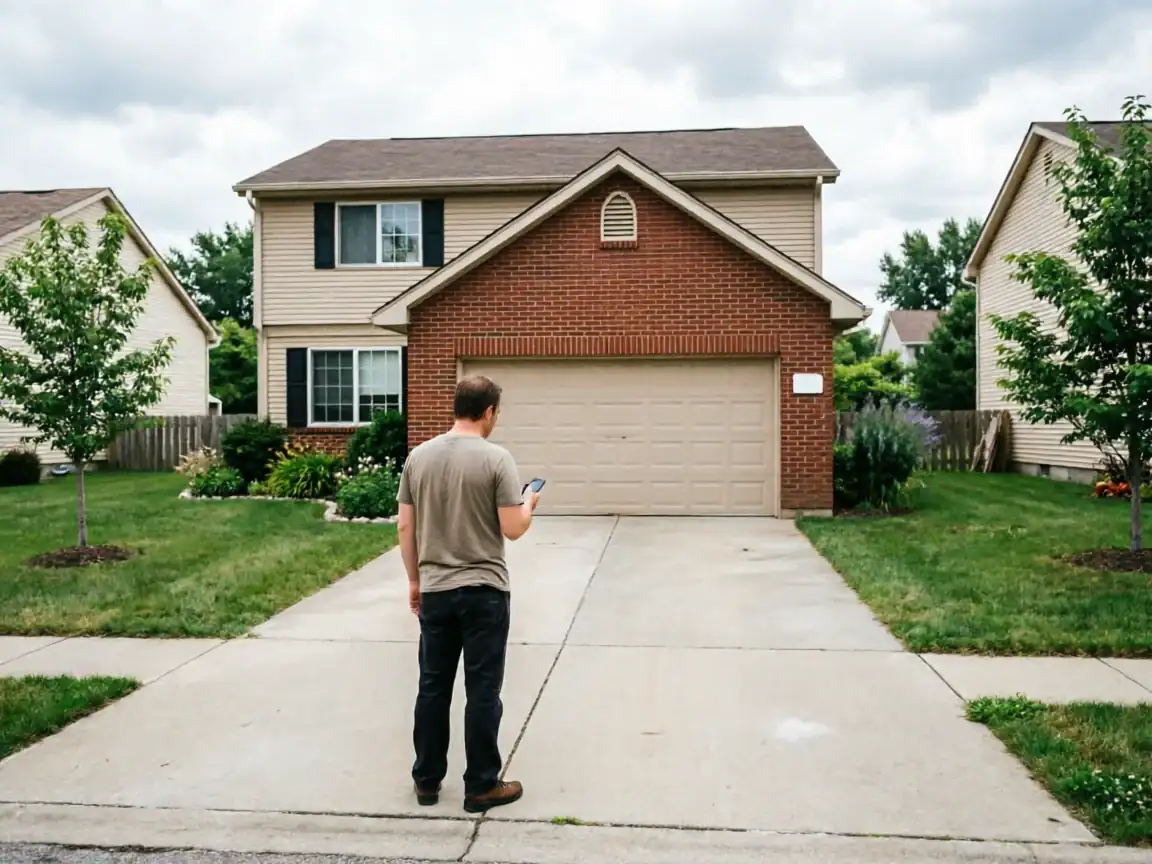
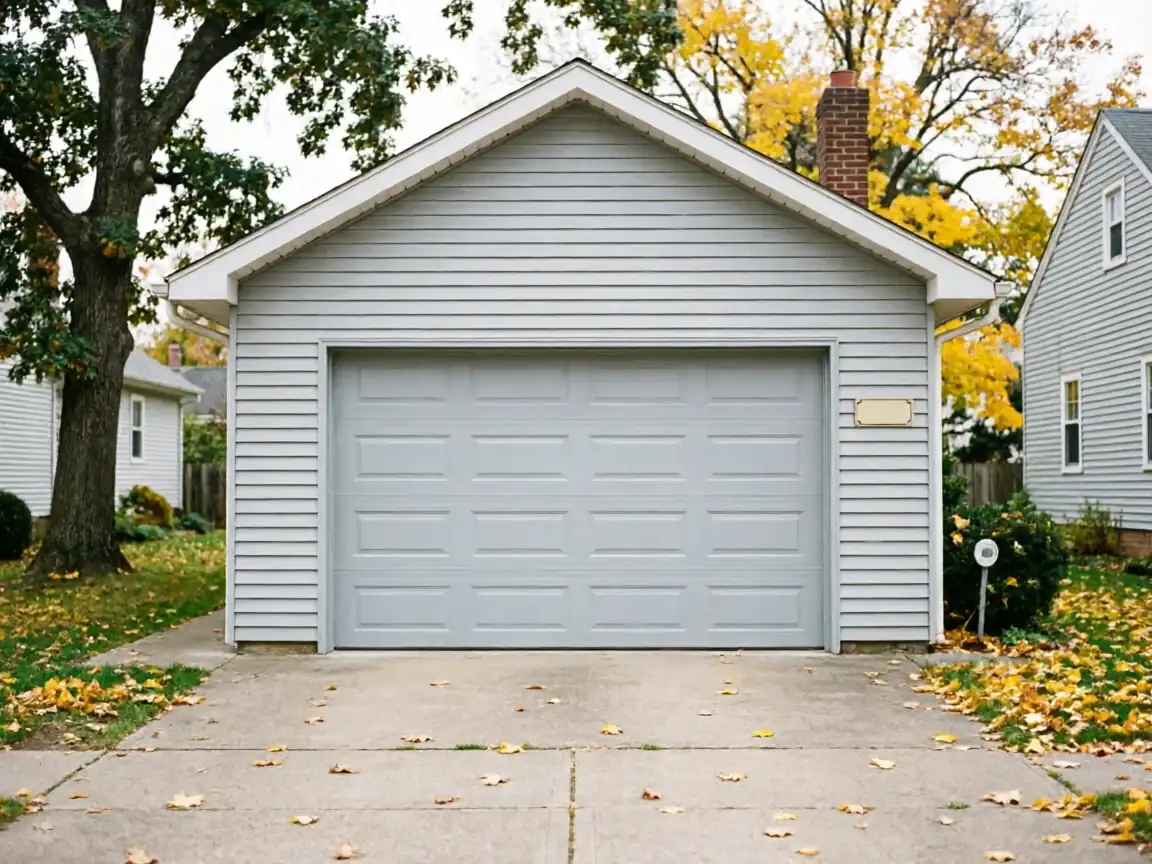
The reason off-track calls keep coming from this town isn't bad luck. Most houses here went up by 1969, inside the 1938-to-1969 building run that covers this area's older housing stock. That era used steel tracks and extension-spring setups, not the torsion systems built into newer doors. Those tracks were never engineered for forty-plus years of daily cycling, and a door that's run on the same bent or loosened rail for decades eventually walks off it.
How It Shows Up
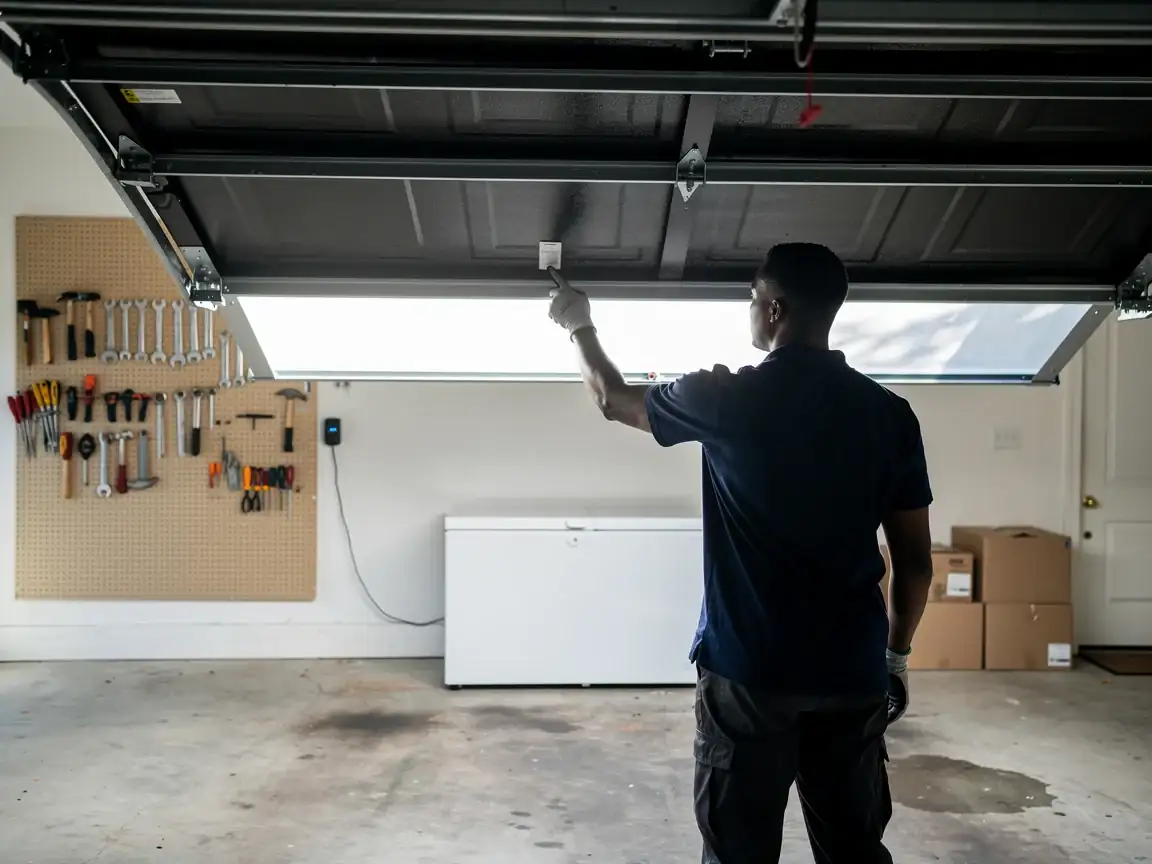
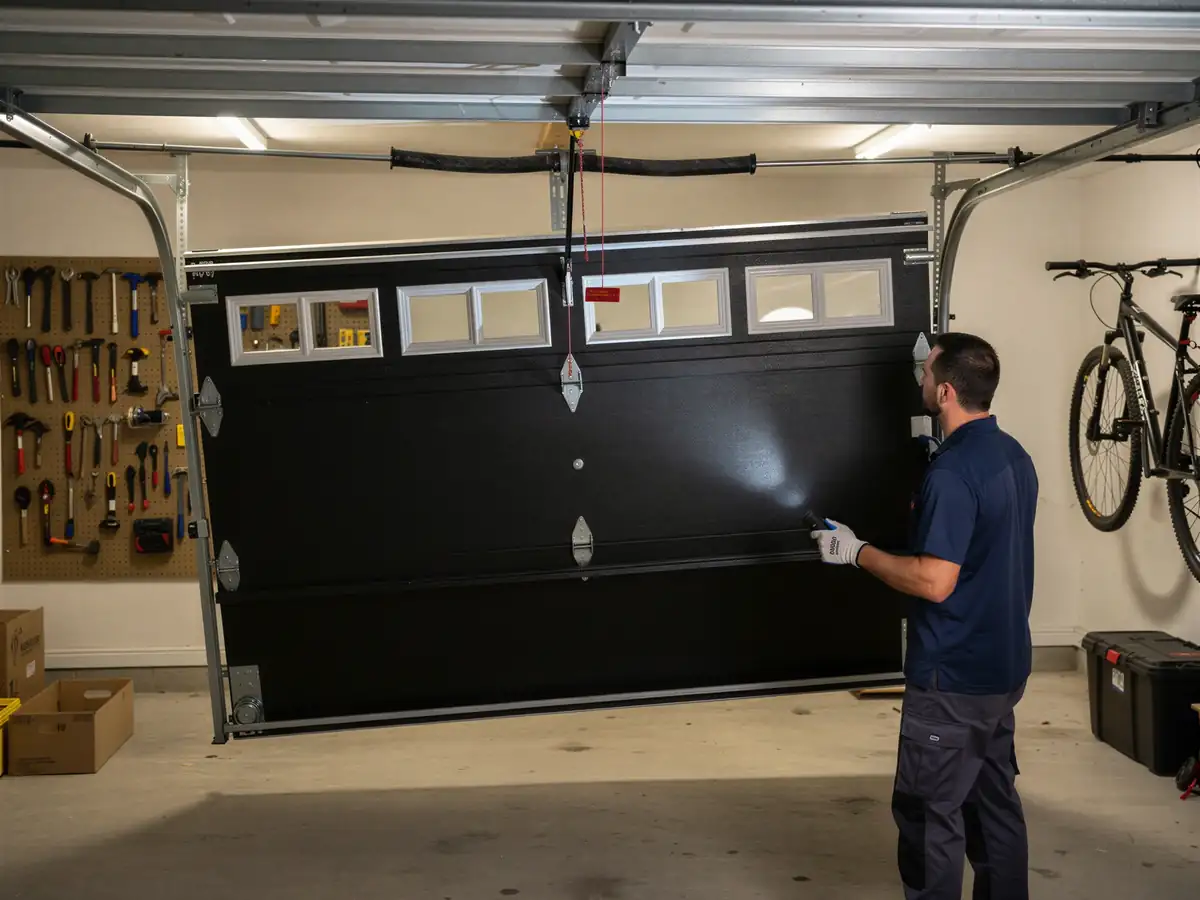
The classic sign is a door that hangs crooked in the opening, one side riding lower than the other, or a bottom panel that's visibly kicked out from the track rather than sitting flush against the wall. Sometimes it's quieter than that: the door runs with a grinding scrape on one side that wasn't there last month, or it stalls partway up and refuses to go further.
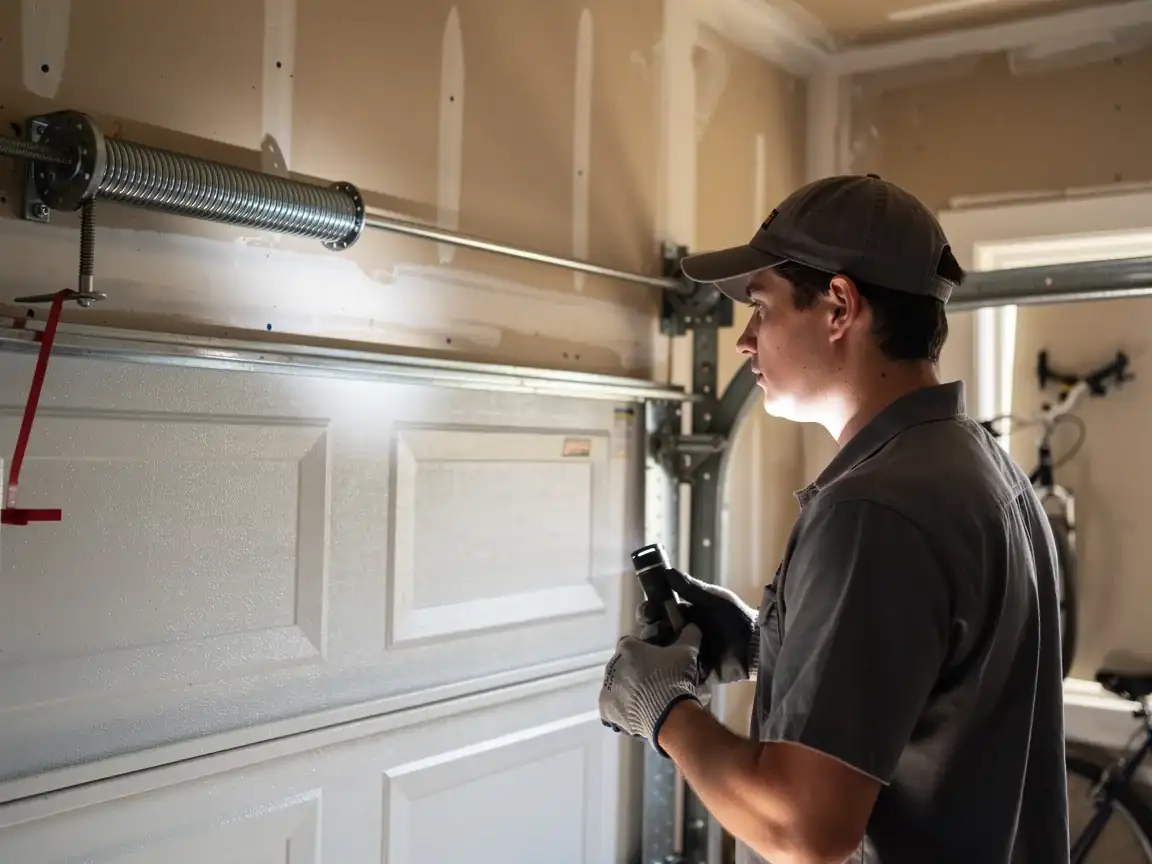
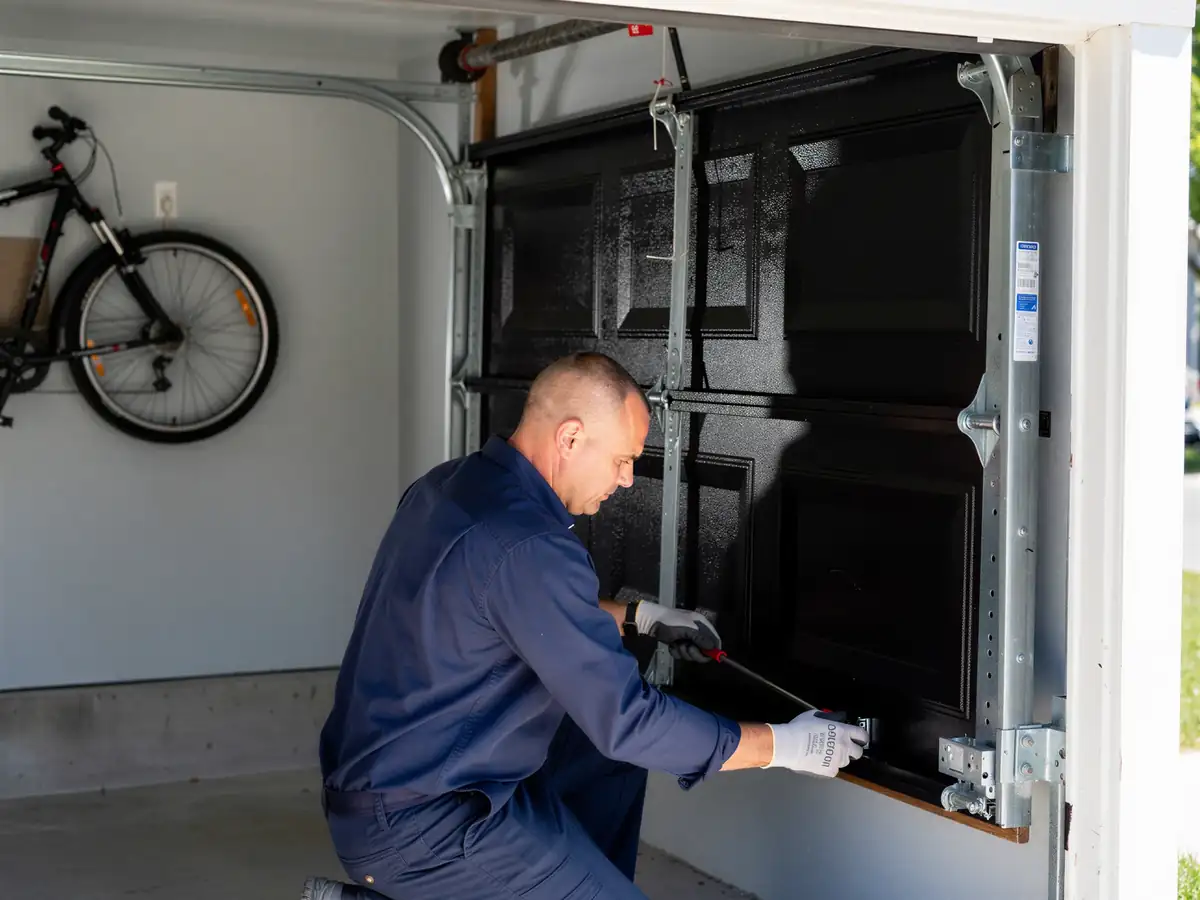
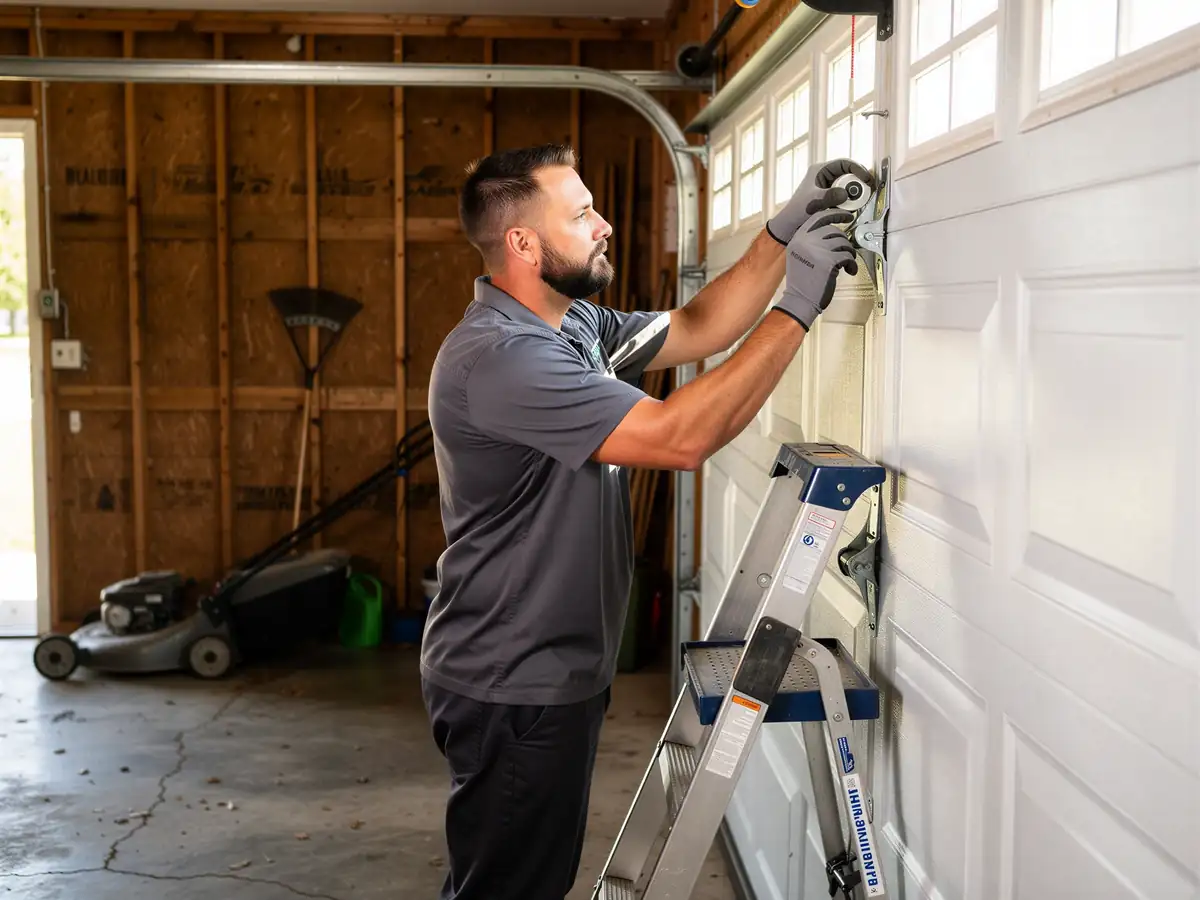
On the older extension-spring hardware common in Mendon's 1960s-era housing, the usual culprit is a bent bottom bracket, a roller that's worn its track channel wide, or a track section that's pulled loose from its wall jamb mounting. None of those are catastrophic on their own, but an opener that keeps trying to force a door past a jammed track will eventually bend the track further, or strip the drive gear in the opener head trying to push through resistance that was never supposed to be there.
The Cost of This Job
A straightforward off-track repair
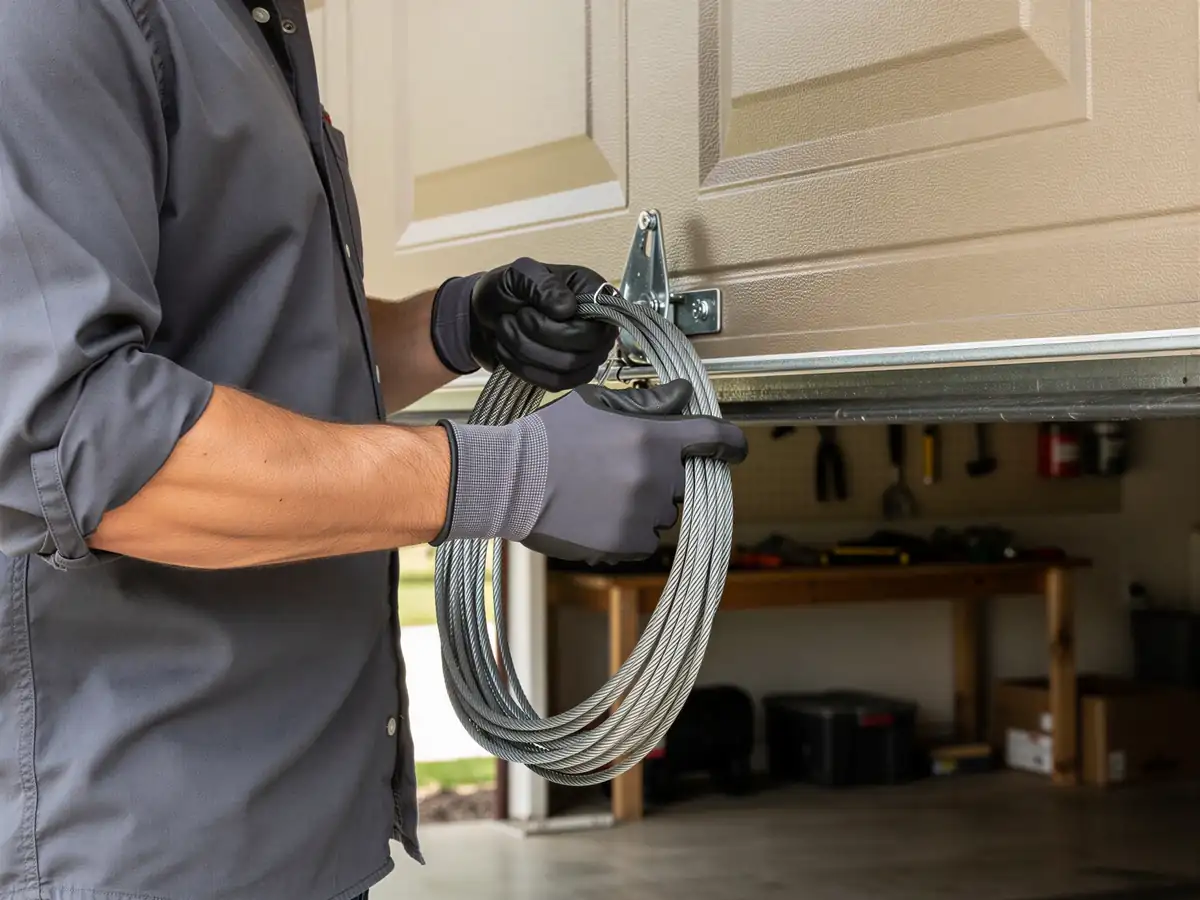
Resetting the door in its track, replacing a bent bracket, swapping worn rollers - is usually a smaller job than most homeowners expect. Where it gets expensive is when the track itself is bent along its length, or when the door has been forced hard enough to crack a panel or bow the frame. At that point you're not paying for a repair, you're paying for parts that have to be matched to hardware installed before 1969, and that search alone adds time to the job.
At Mendon's median income of $62,778, a repair bill in the low range is a manageable Tuesday expense
A full door replacement is a different category of spending, and it's worth doing the math before committing - sometimes a door that's merely off-track is worth saving even if it looks rough, and sometimes the frame damage underneath means replacement was the right call before the truck even arrived.
- $62,778 median household income
The DIY Question
An off-track door under spring tension is not a safe weekend project, and that's the honest limit here: we don't talk anyone through doing this themselves over the phone. Extension springs store enough force to snap a bracket loose under load, and a door that's already partway off its track can drop without warning once you start loosening anything holding it in place.
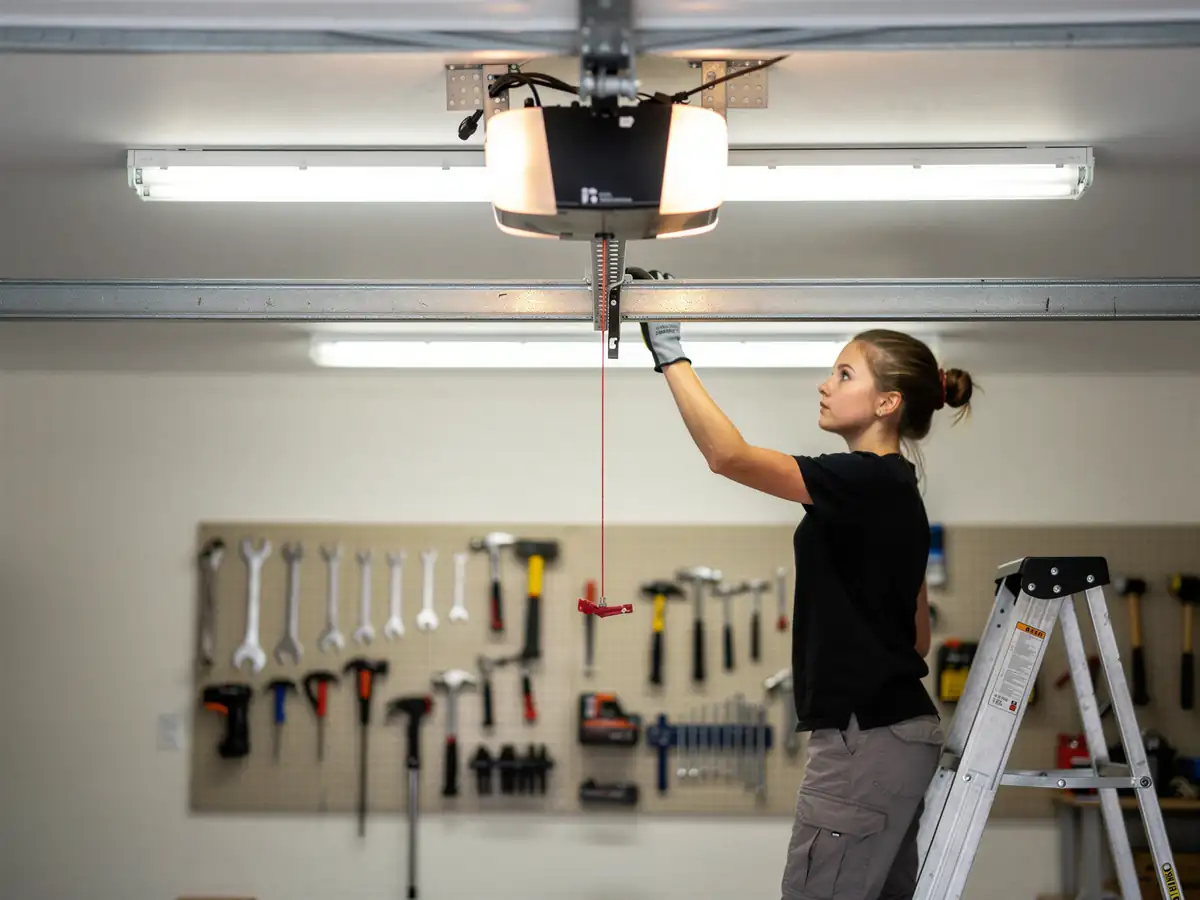
What a homeowner can safely check before calling is whether the opener has been fighting the jam - if the motor keeps straining and reversing on the same spot, switch it to manual and leave the door where it is rather than letting the opener keep forcing it. That one step prevents a simple bracket fix from turning into a cracked panel or a stripped opener gear, which is the difference between a short repair call and a much longer one.
Where This Job Goes Sideways
The job gets harder when the track has been bent for a while and the door's been riding on it anyway. Every cycle on a bent track wears the rollers unevenly, and by the time someone calls, it's not one bad bracket - it's a track that needs full realignment, rollers that need replacing on both sides, and sometimes a panel that's taken on a permanent flex from being forced through a narrowed channel.
Across the four pockets of 1960s-70s housing stock that make up this service area, the fault pattern repeats: original hardware, decades of cycling, and a bracket or hinge that finally gives. Mendon's share of that stock, built mostly by 1969, follows the same curve. The cold-moderate climate here doesn't crack a track overnight, but seasonal temperature swings do work bolts loose over the years, and a loose bolt on an old bracket is usually the first domino.
What the Fix Involves
The actual repair starts with getting the door back into its track safely under control
Then checking the track itself for bends along its full run - not just at the point where it looks obviously off. Rollers get inspected for flat spots or worn edges, brackets get checked for the bend that caused the problem in the first place, and the track gets re-anchored to the jamb if the mounting has worked loose.
For houses on original 1960s hardware, matching replacement parts sometimes takes longer than the repair itself
Since extension-spring track components aren't always the same stocked size as newer torsion setups. Mendon sits about 12 miles out from Quincy, close enough that the trip itself isn't the bottleneck - it's the parts matching on older hardware that can add a day to the job. See the Quincy off-track repair page for how this same fault plays out across the rest of the service area, or the Mendon service page for what else this shop covers here.
- 12 miles