Why This Fails Locally
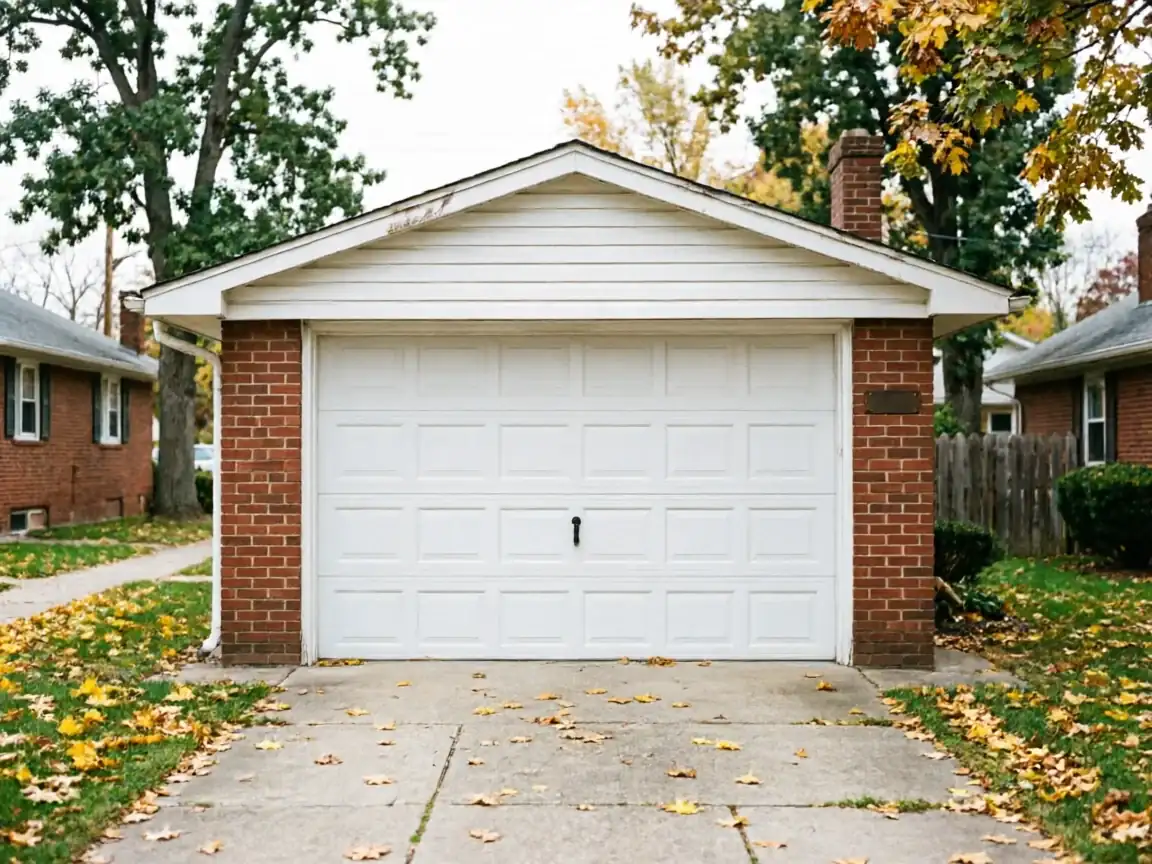
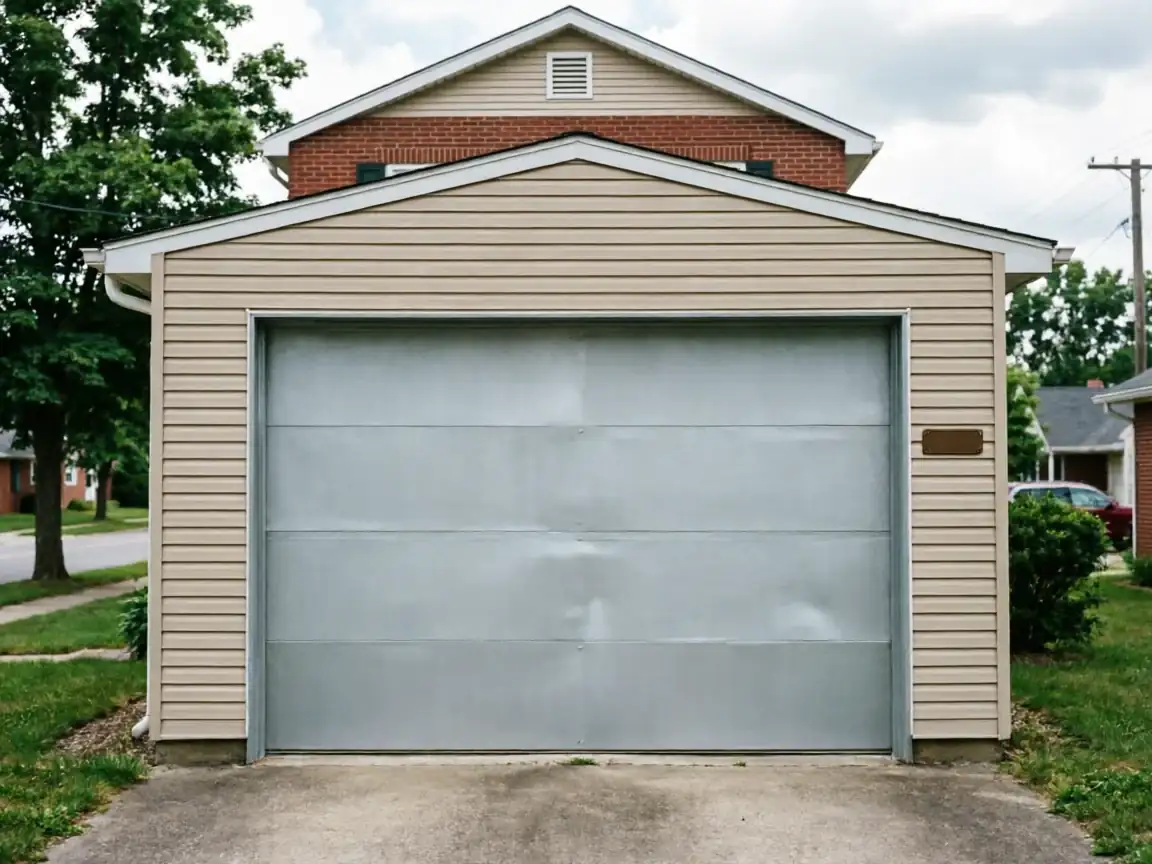
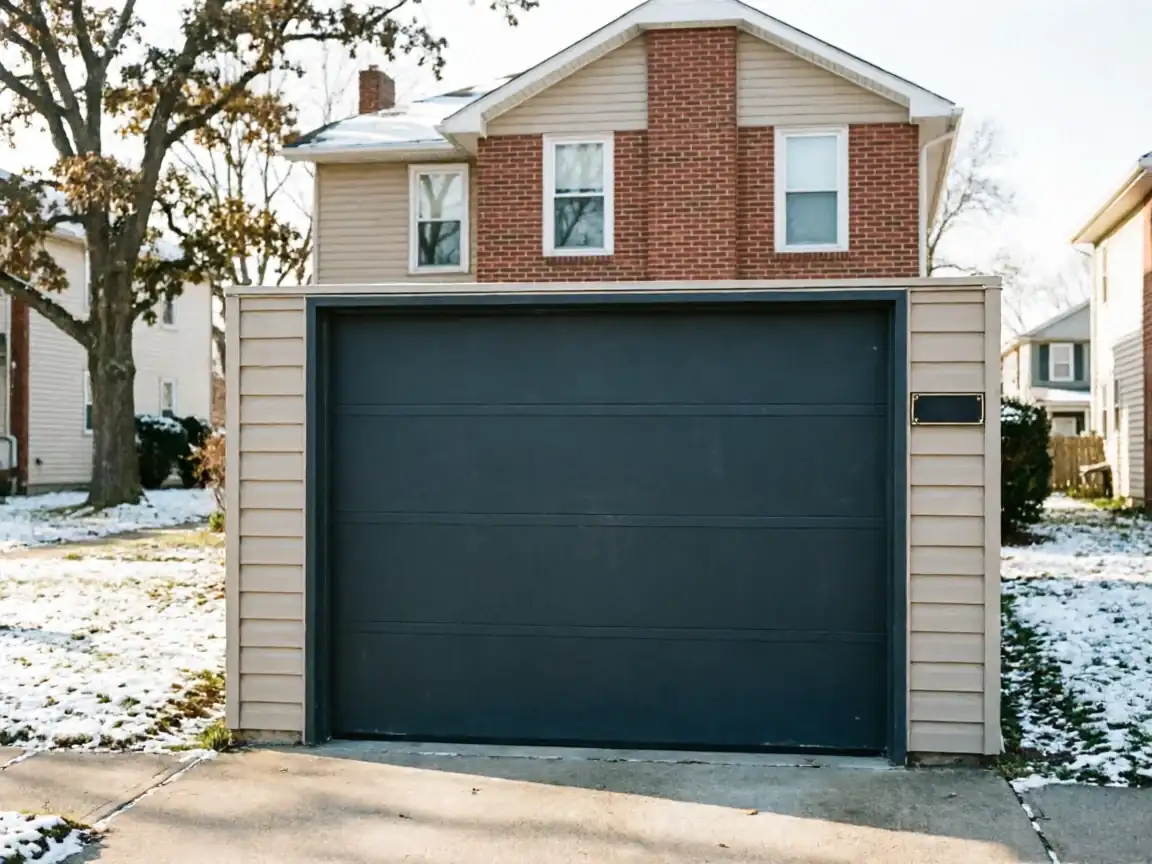
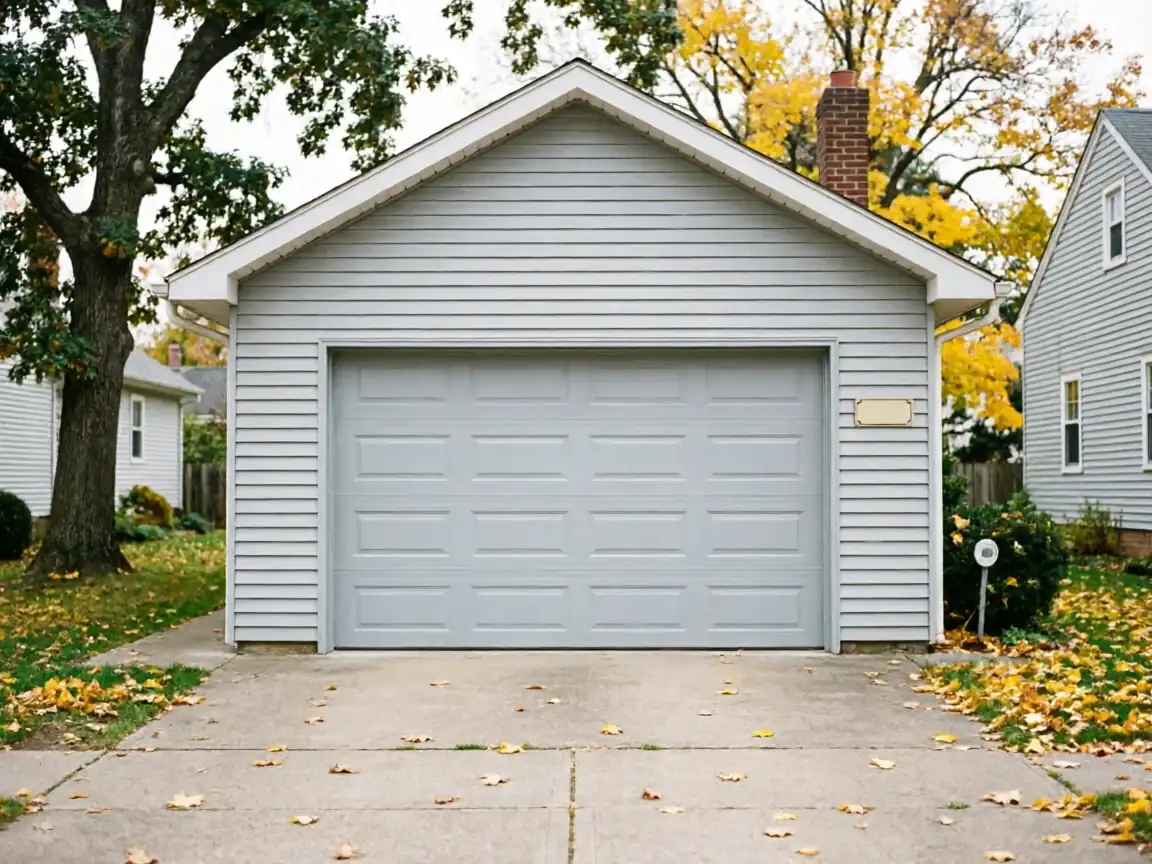
Most houses in Mendon went up around 1969, which puts them at the tail end of the build wave that covered this part of the service area between 1938 and 1969. That means a lot of garage doors here are the plain steel single-layer panel that was standard for the era - no foam core, a thinner gauge skin, and hardware sized for a lighter door than what often gets installed on top of it later. The track and spring assembly on these doors was built for a door that weighed less than the insulated replacements homeowners sometimes bolt into the same opening decades later. When that happens, the torsion spring is under-sized for the new load and it wears out faster than it should. Add in a climate band that runs cold through the winter, and steel that's already thin starts to flex and pit at the bottom panel where road salt and snowmelt sit against it. None of this is a Mendon-only phenomenon in the sense of weather, but the age of the housing stock here is what sets the clock running. A door that's original to a 1969 build is now well past any reasonable service life for its springs, cables, and rollers, even if the panel itself still looks fine from the driveway.
How It Shows Up
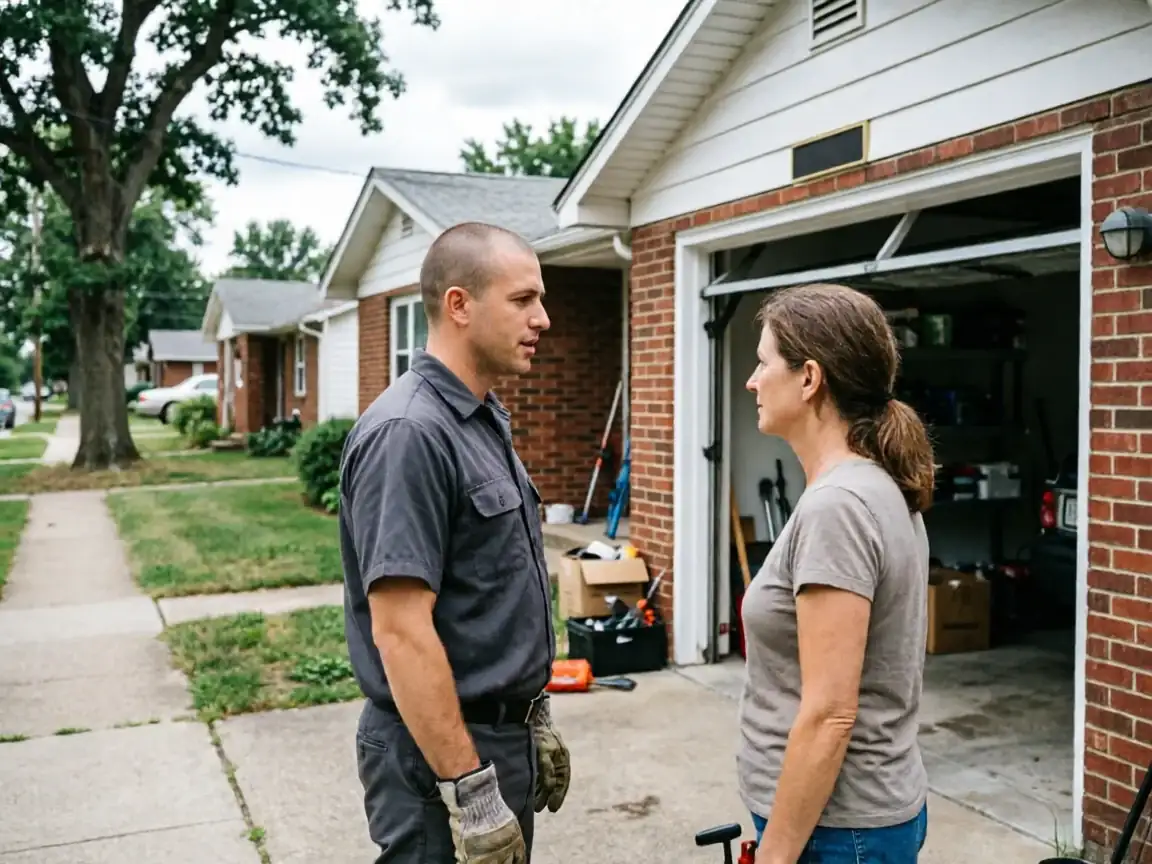
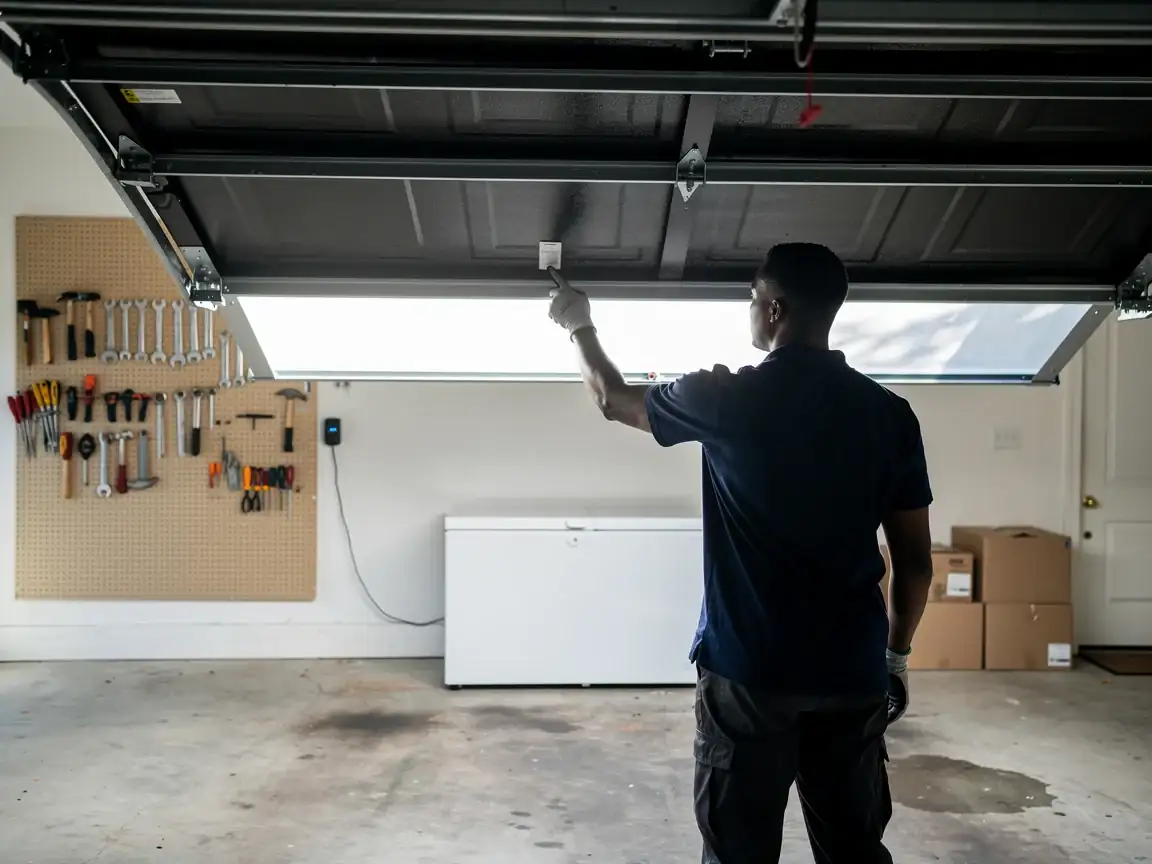
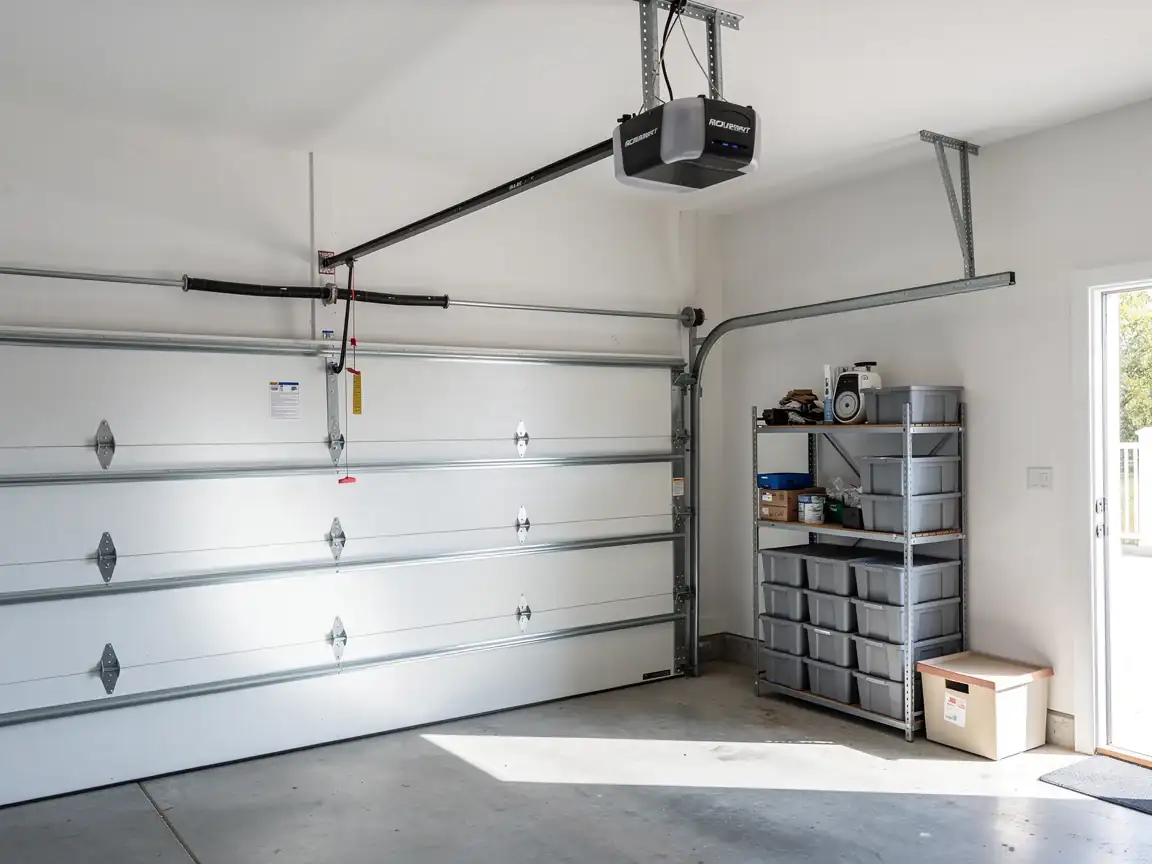
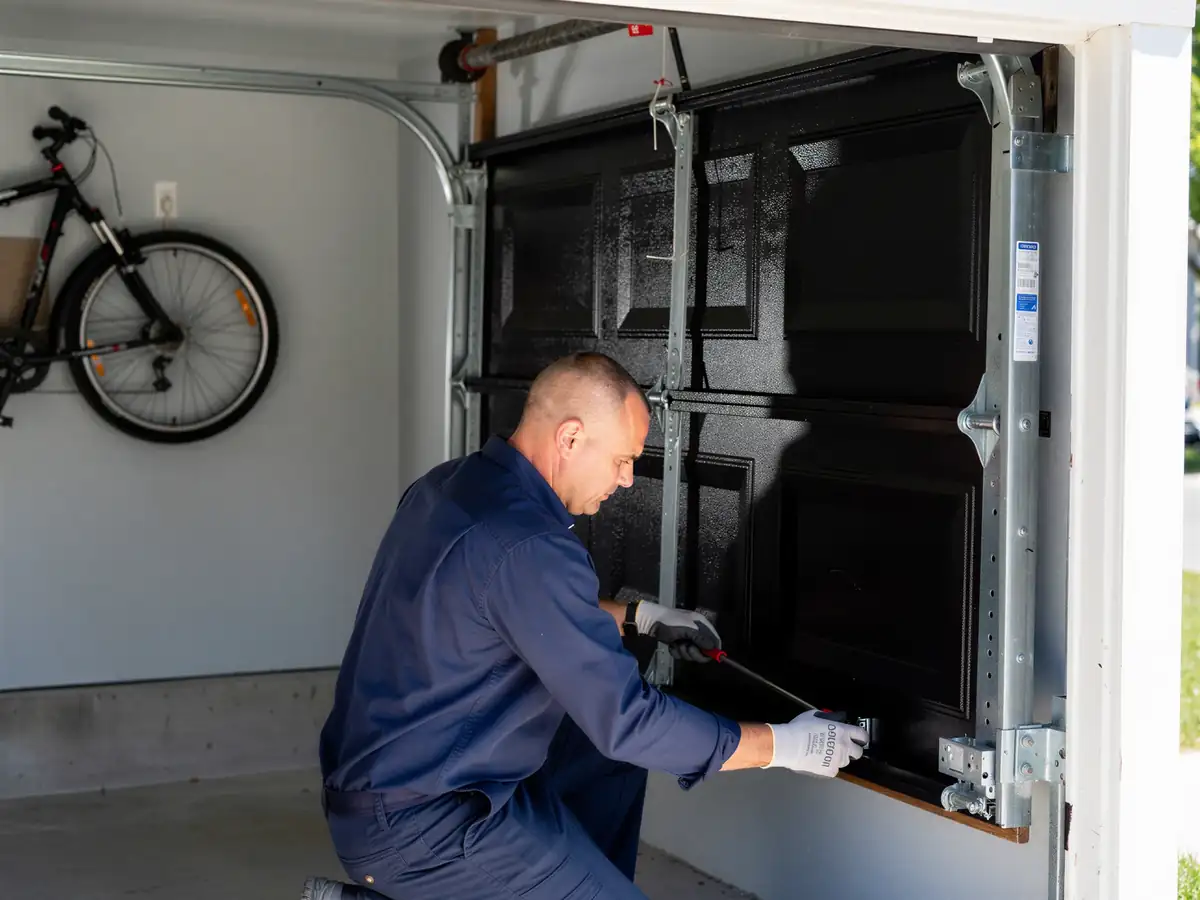
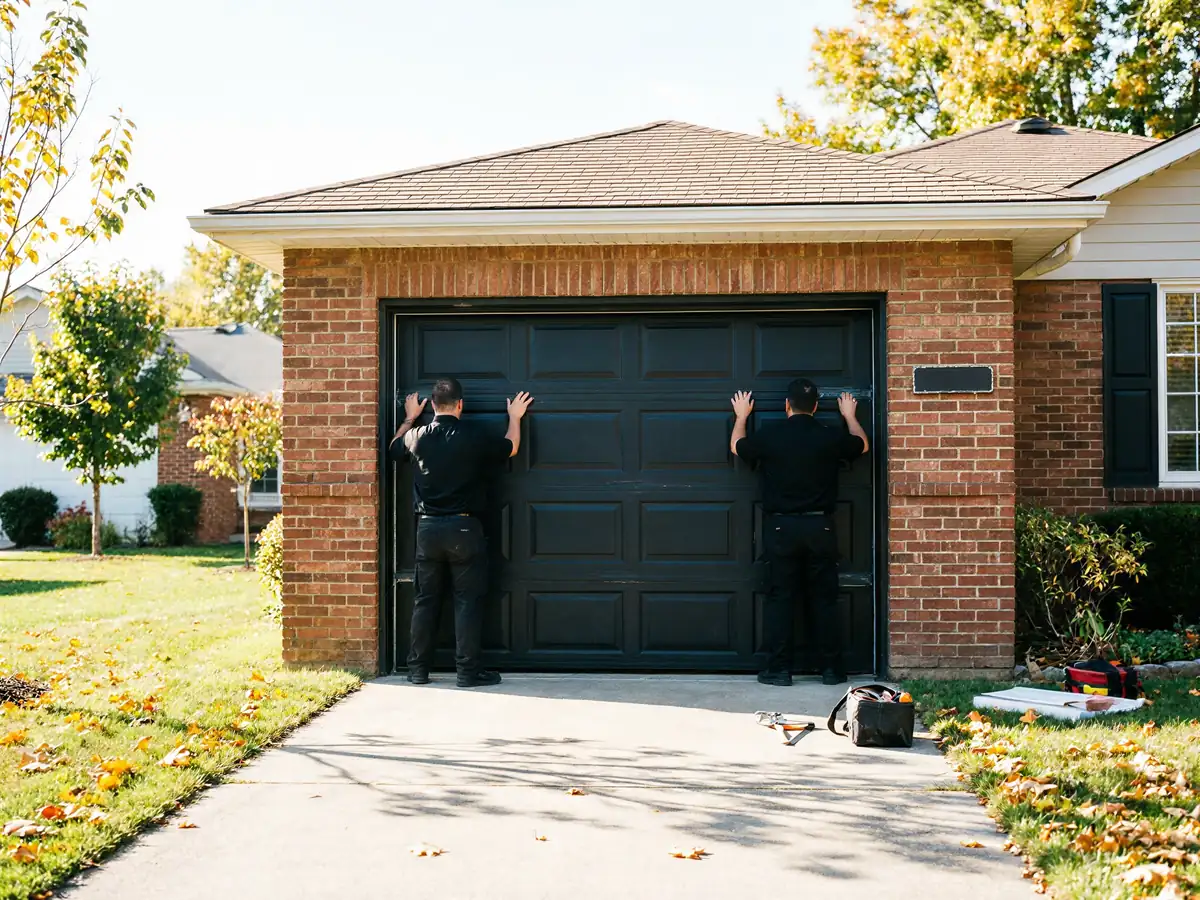
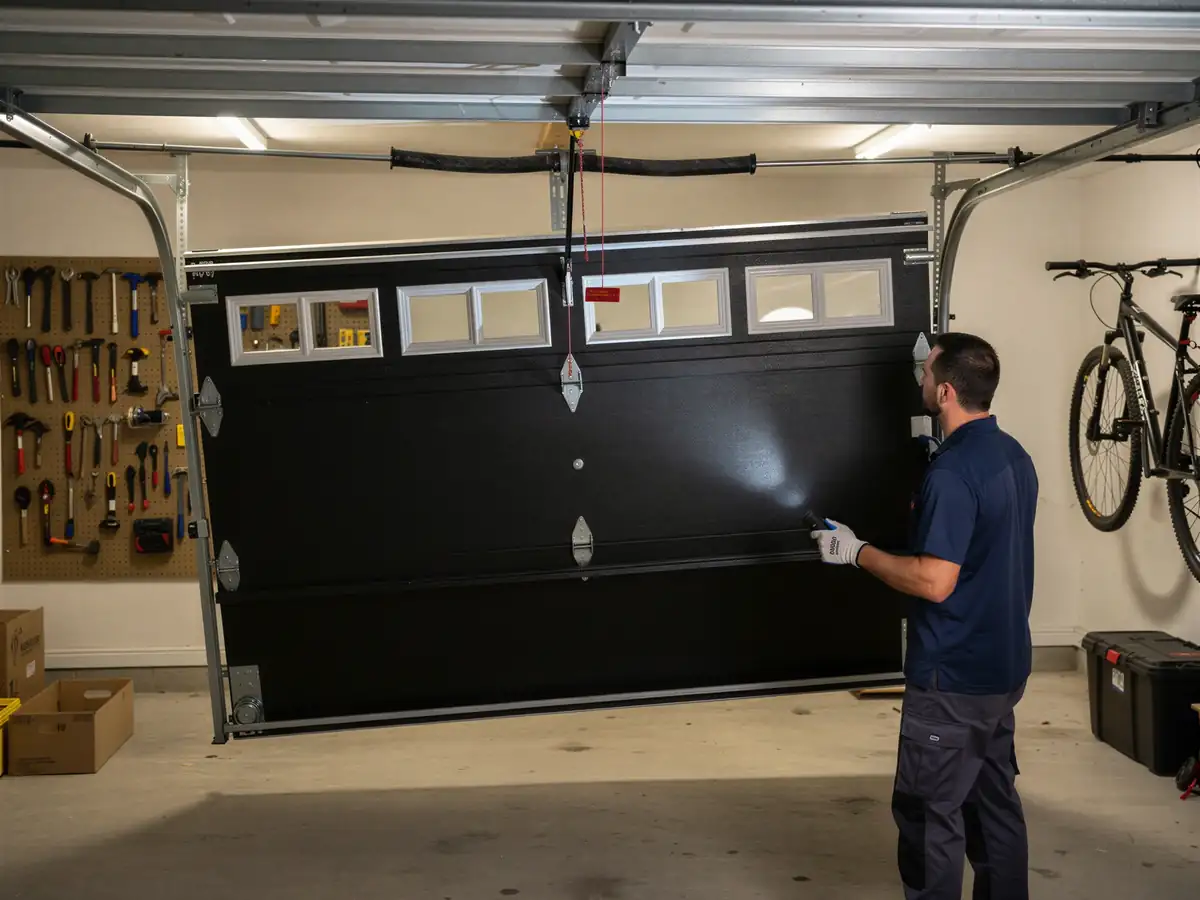
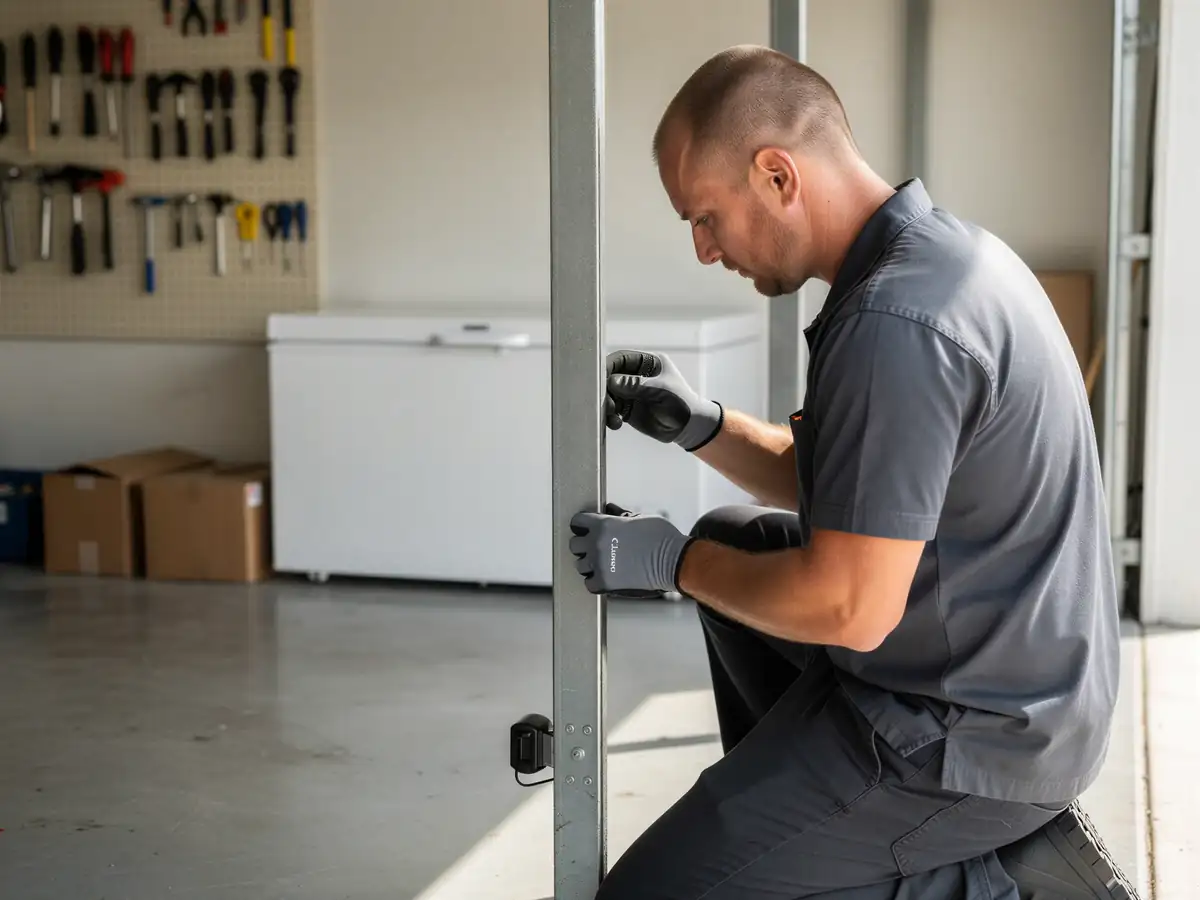
The first sign is usually noise - a grinding or popping when the door travels, which on a door this age is almost always the original rollers, not the opener. Steel rollers from the 1960s-70s stock run in tracks that have loosened at the brackets over fifty-plus years of use, and the slack shows up as a door that shudders instead of gliding. The second sign is a door that won't stay up on its own, which points to a spring that's lost tension - common on doors that were never upgraded from their original torsion hardware. Third is a door that reverses partway through closing, which on an older setup is often a safety sensor added after the door was installed, now misaligned instead of a wiring fault. None of these show up as a sudden failure. They build for months, which is why a lot of Mendon calls start with 'it's been doing this for a while' rather than 'it broke today.'
The DIY Question
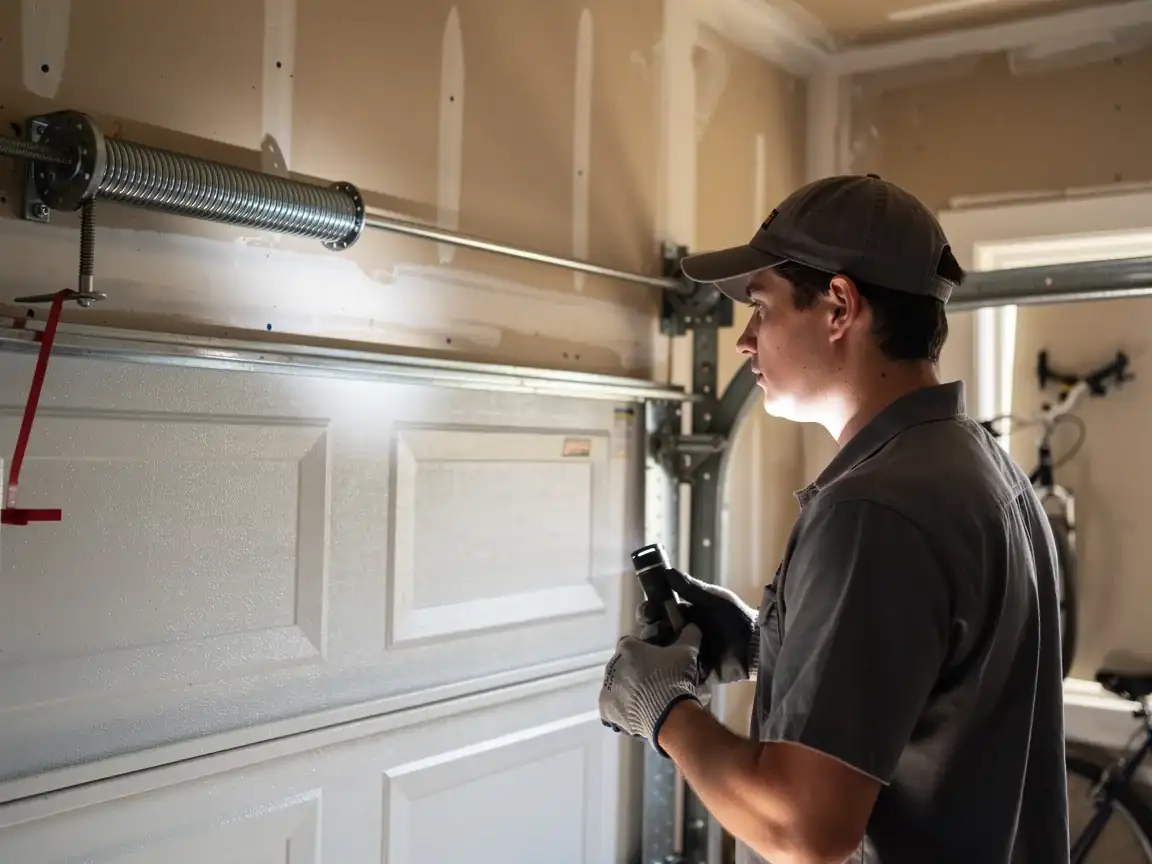
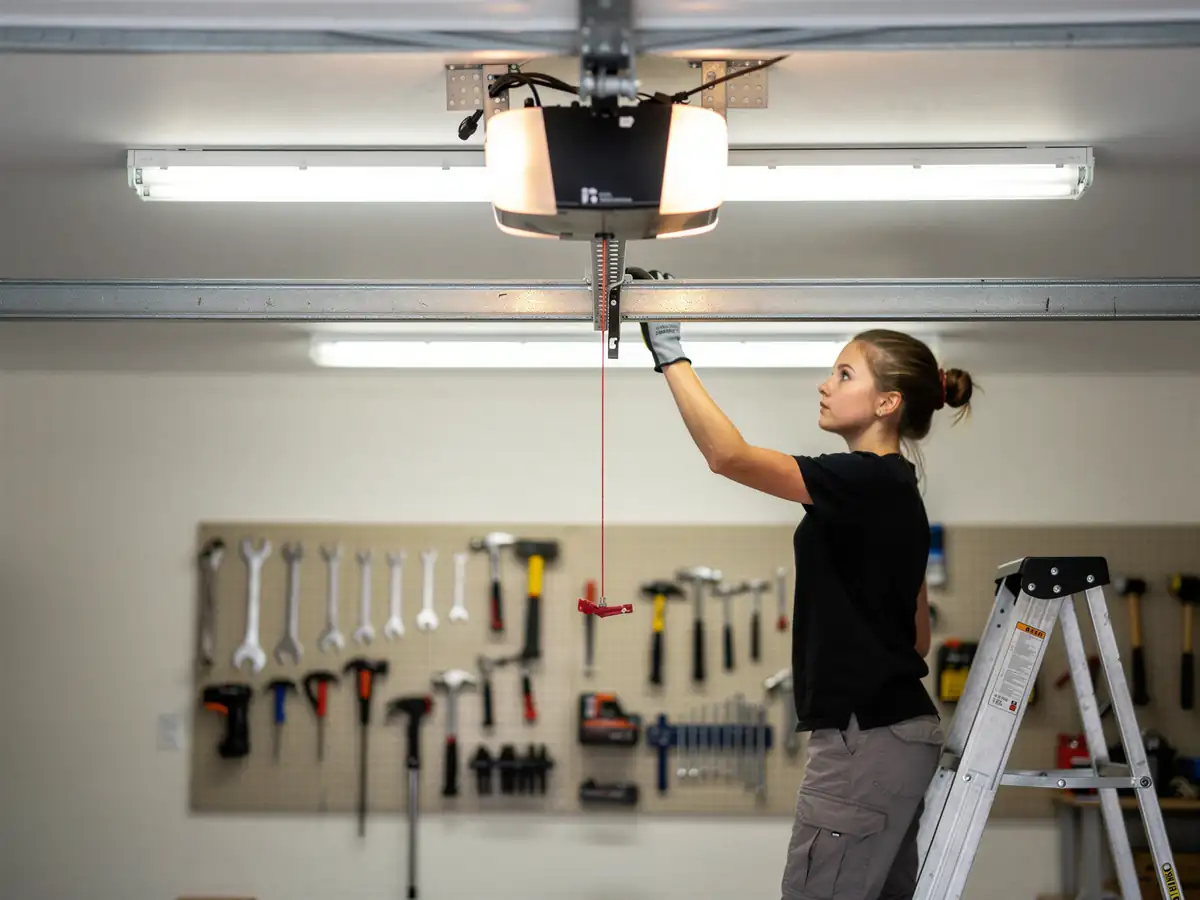
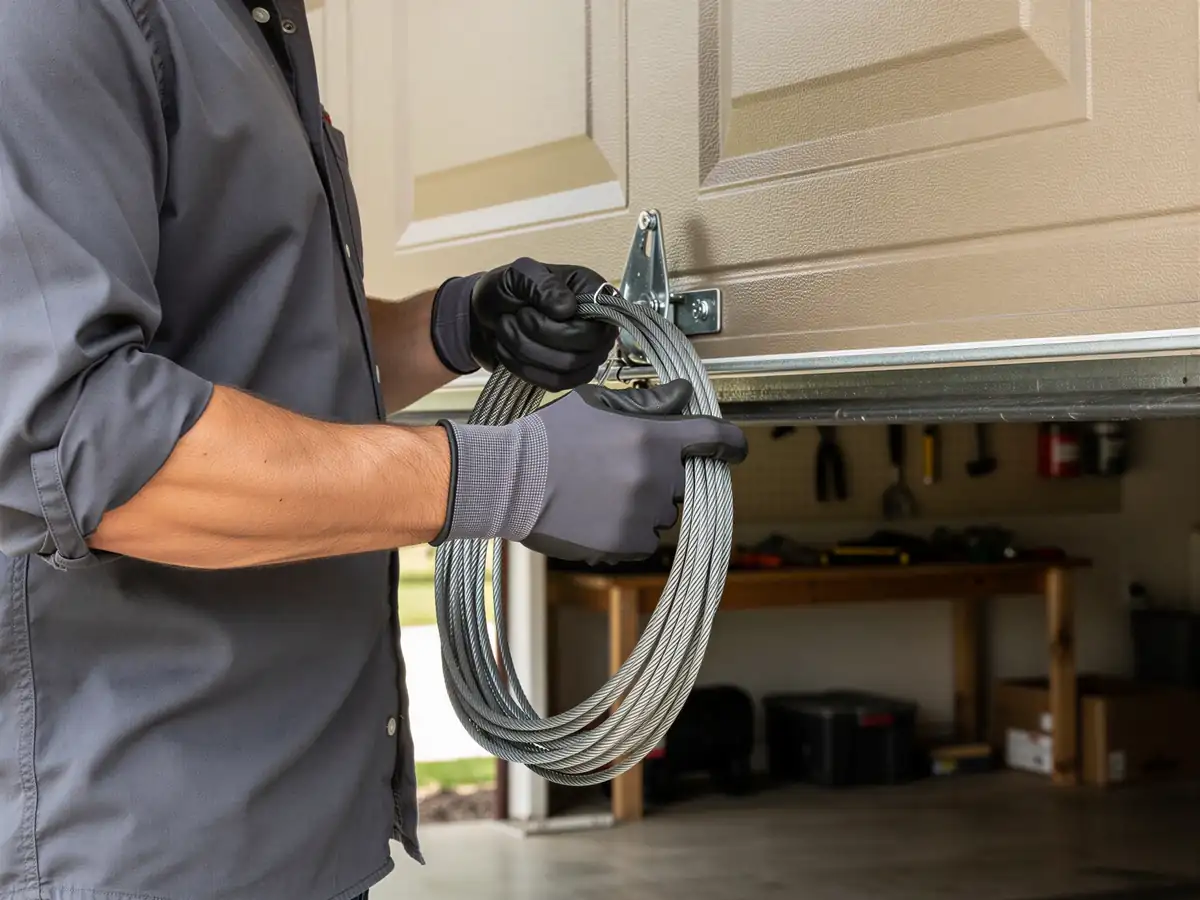
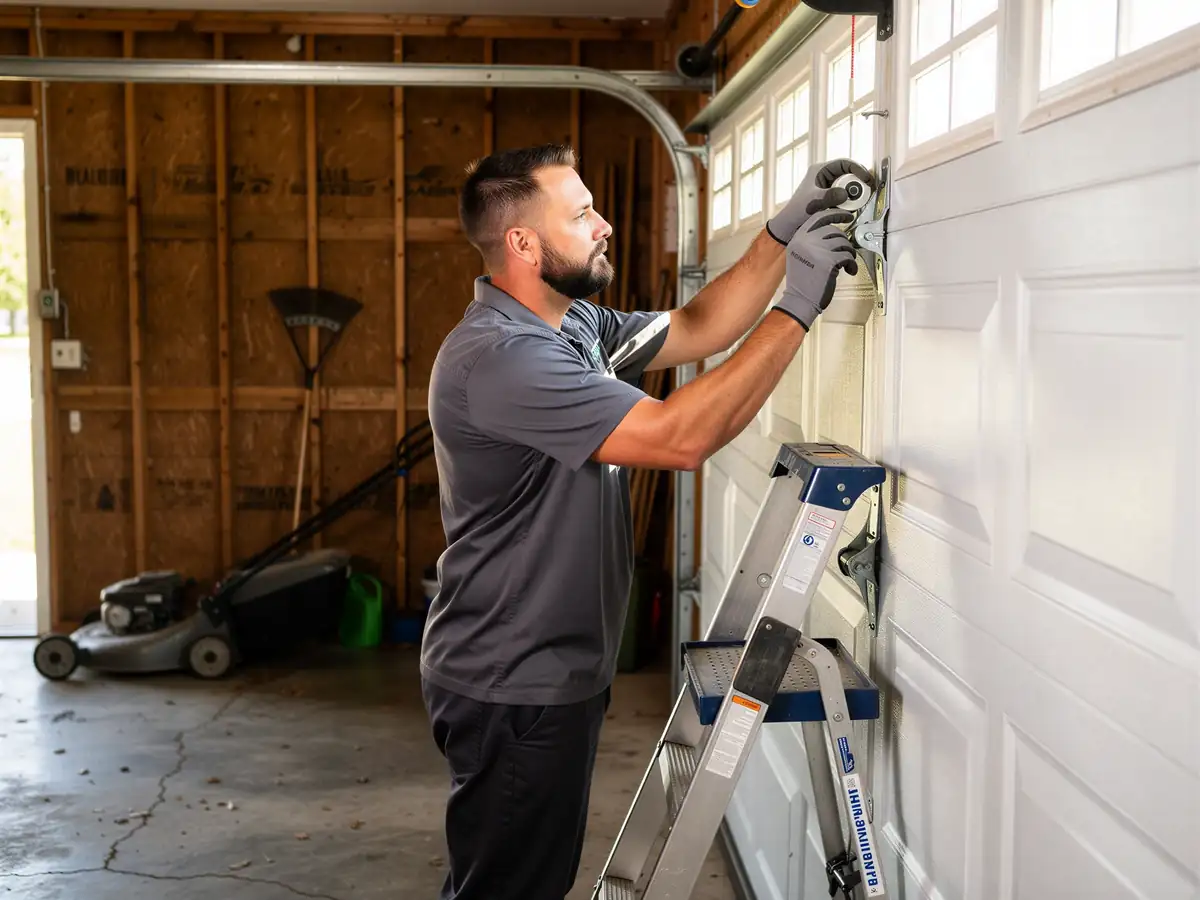
A torsion spring holds enough stored force to cause a serious injury, and that doesn't change based on how old or light the door is - if anything, an older under-sized spring that's been restretched or replaced once already is less predictable than a new one. Roller and hinge swaps are reasonable homeowner jobs on most doors. Spring adjustment, cable replacement, and anything involving the torsion tube is not, especially on hardware this age where the parts may not be labeled to current standards. If your door is one of the original installs from the late 1960s, assume the hardware is original too unless you know otherwise, and treat the spring side of the job as a call, not a weekend project.
Where This Job Goes Sideways
The common mistake on a door this age is replacing only the part that failed - a cable, say - and leaving a spring that's visibly stretched or a track that's bent from decades of minor impacts. The door runs for a while, then the next worn part lets go, and now it's a second service call for a job that could have been done once. The other place it goes wrong is sizing: a heavier insulated replacement panel dropped onto original-era torsion hardware overloads a spring that was never rated for it, and the door fails again within a year. With roughly 404 households in Mendon and most of that stock from the same build period, this isn't a one-house problem - it's a pattern across the area.