Why This Fails Locally
Most of Quincy's housing stock went up between 1938 and 1969, with the median build year landing around 1964. That's not a small detail - it means a huge share of the garage doors in this town are either original to the house or replacements installed on original, decades-old track and hardware. Across the four main pockets of 1960s and 70s construction around Quincy, you see the same pattern: steel torsion springs rated for a certain number of cycles, installed when the house was built or soon after, now decades past that rating.
Add in the climate. Quincy sits in a cold moderate band, which means real winter temperature swings every year. Steel contracts in the cold. Lubricant that was fine in August turns gummy by January. A spring that's already near the end of its life cycle doesn't need much more stress to let go - and a cold snap is exactly that extra stress. This isn't a one-off weather event, it's just what happens every winter to hardware that's been doing its job since the Johnson administration.
So when we get a call in Quincy, the first question in our head isn't "what's broken" - it's "how old is this door, and when was the last time anyone touched the spring." Nine times out of ten that answers most of the question before we even get there.
How It Shows Up
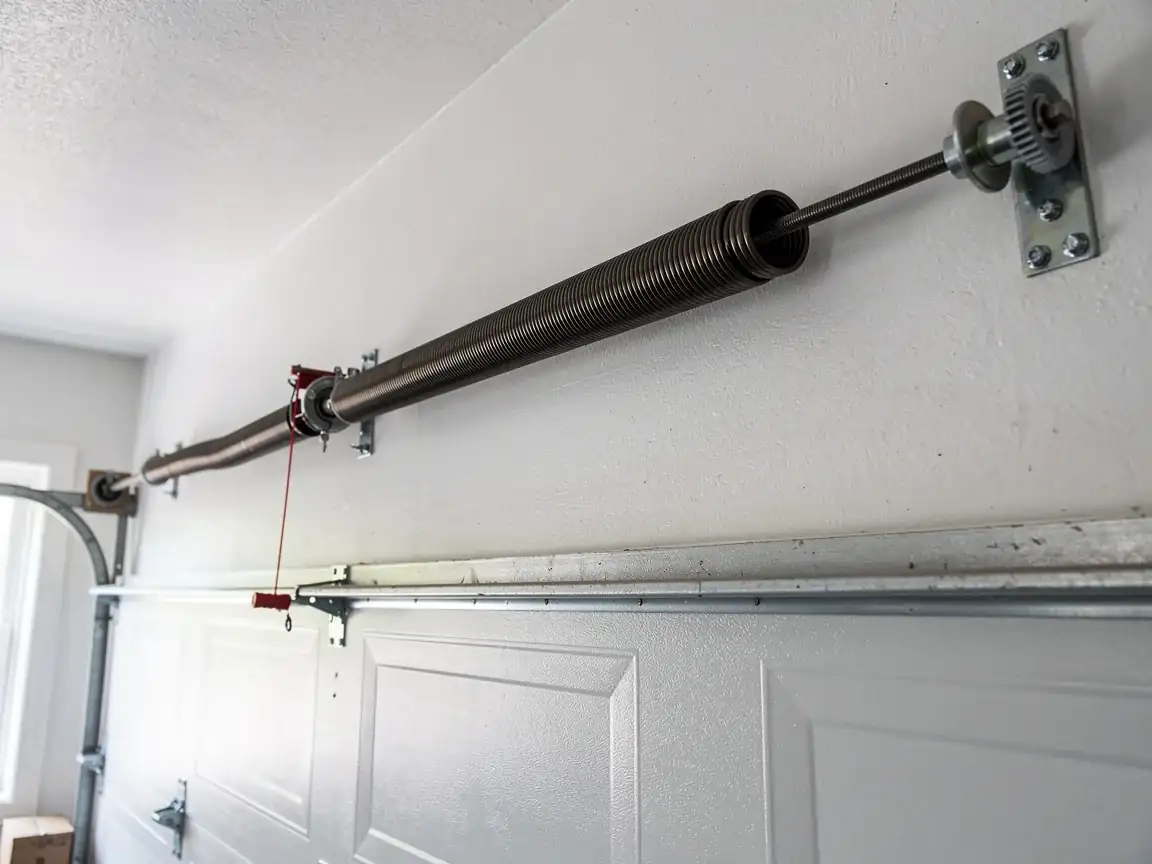
The most common version: the door won't open, or it opens about six inches and stops. That's almost always a broken torsion spring, and on a house from this era it's usually the single spring that's been doing all the lifting since the door was hung decades ago. You'll often hear it before you see it - a loud bang from the garage, sometimes mistaken for something falling or even a car backfiring outside.
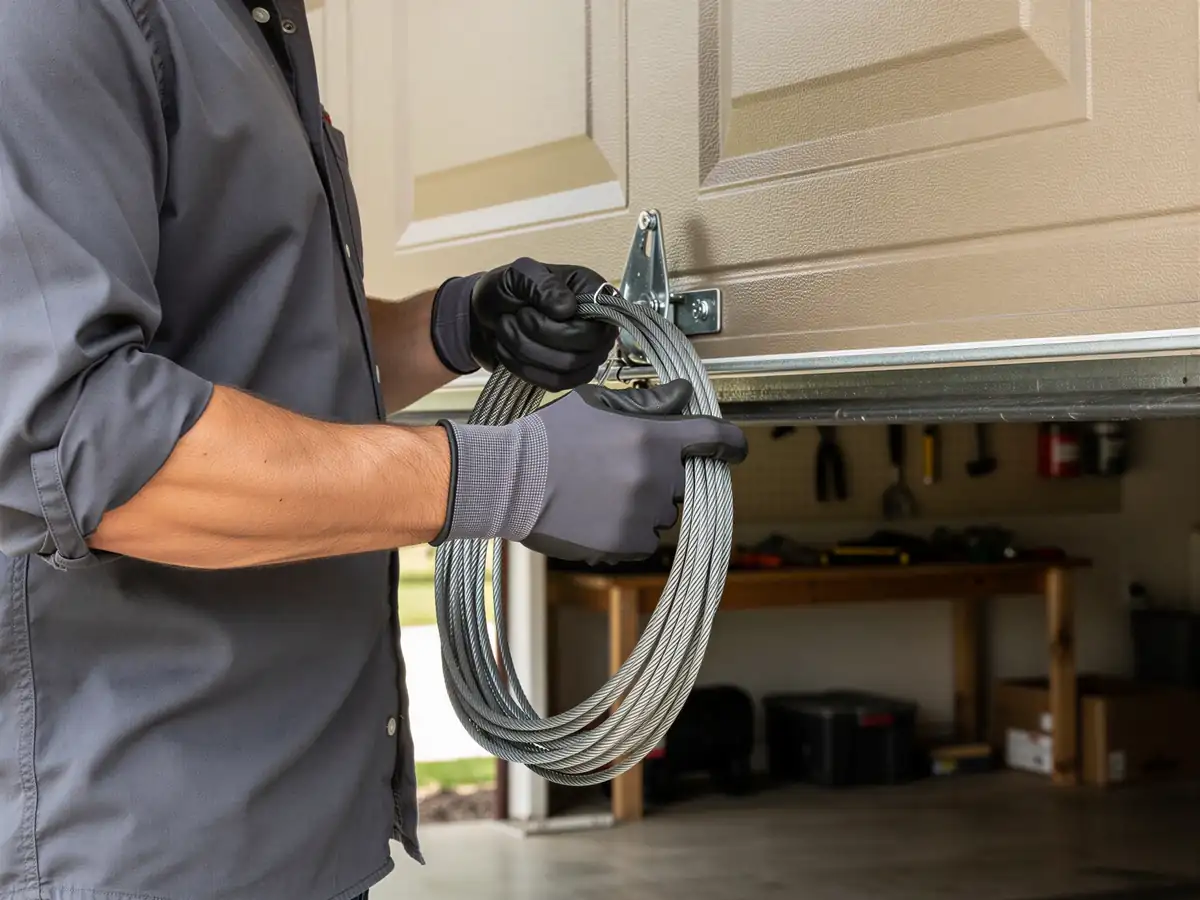
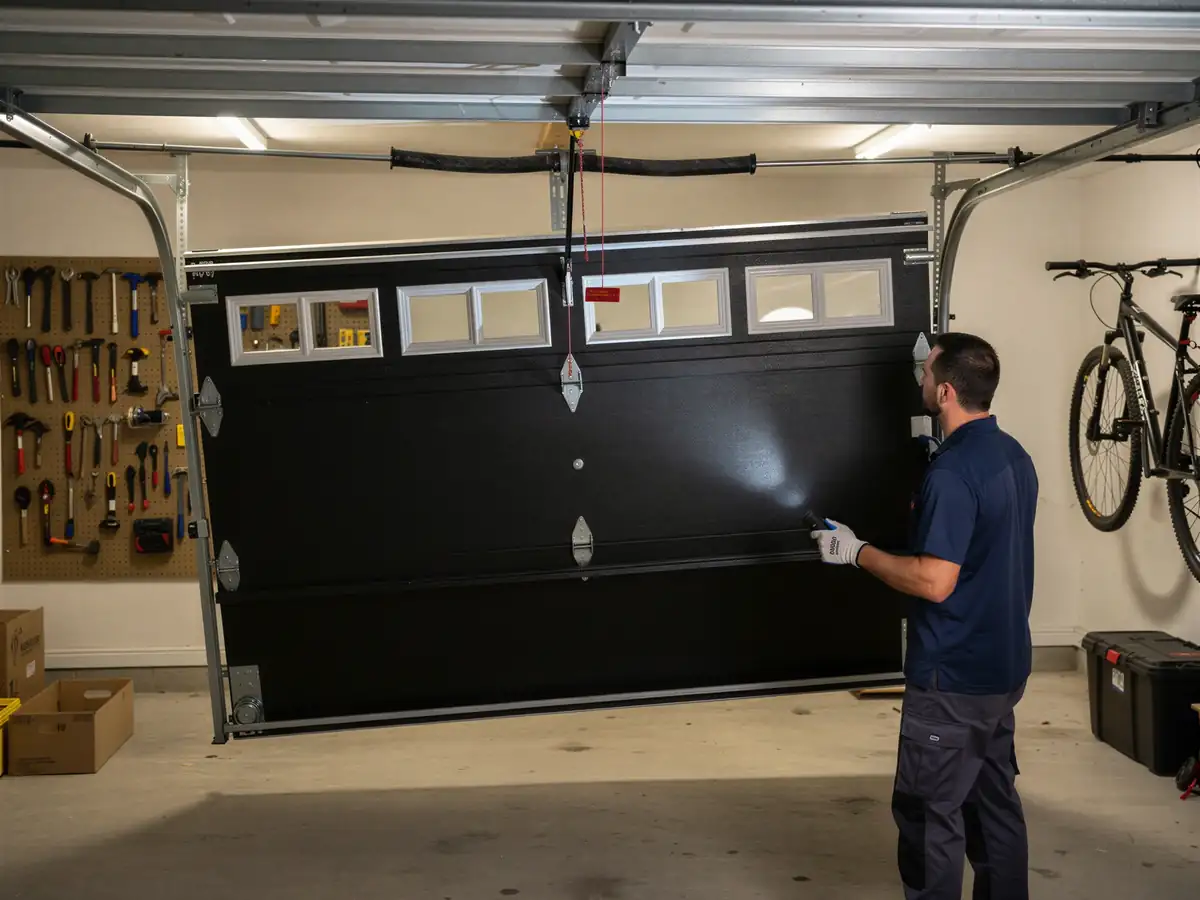
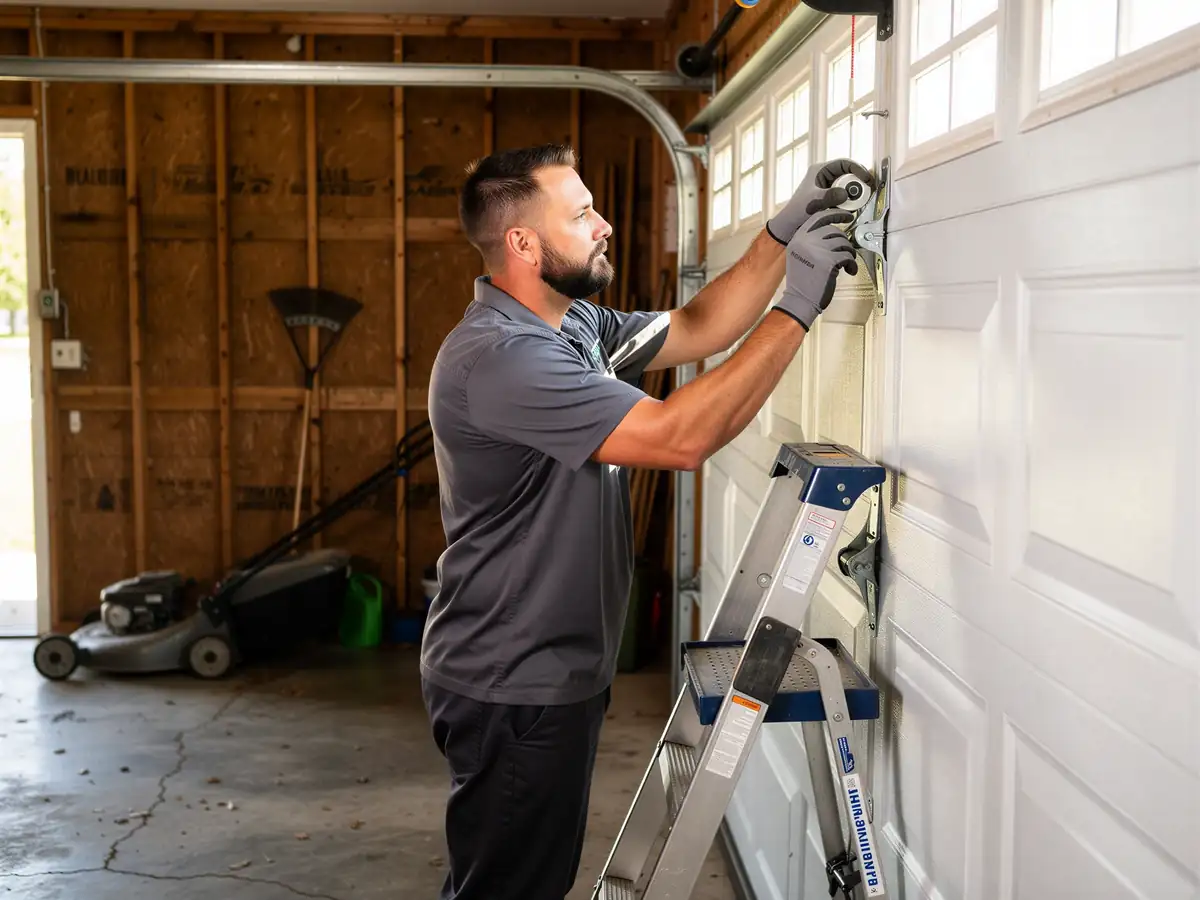
The second pattern is slower: the door starts sagging on one side, or the opener strains and groans partway through the cycle. That's wear showing up gradually in a cable, a roller, or a track bracket that's been flexing a little more each winter as the metal contracts and expands. On older sectional doors common in this part of town, the track brackets were often fastened directly into jamb lumber that's had sixty-plus years to dry out and loosen.
Cold mornings make all of this worse before it gets better. A door that worked fine in October can bind hard in January simply because the grease in the rollers has thickened and the springs are carrying more resistance than they were sized for. If your door is sluggish only on the coldest days, that's not your imagination - that's exactly what this climate does to old hardware.
What the Fix Involves
For a broken torsion spring, the job is straightforward in concept and not something to do yourself
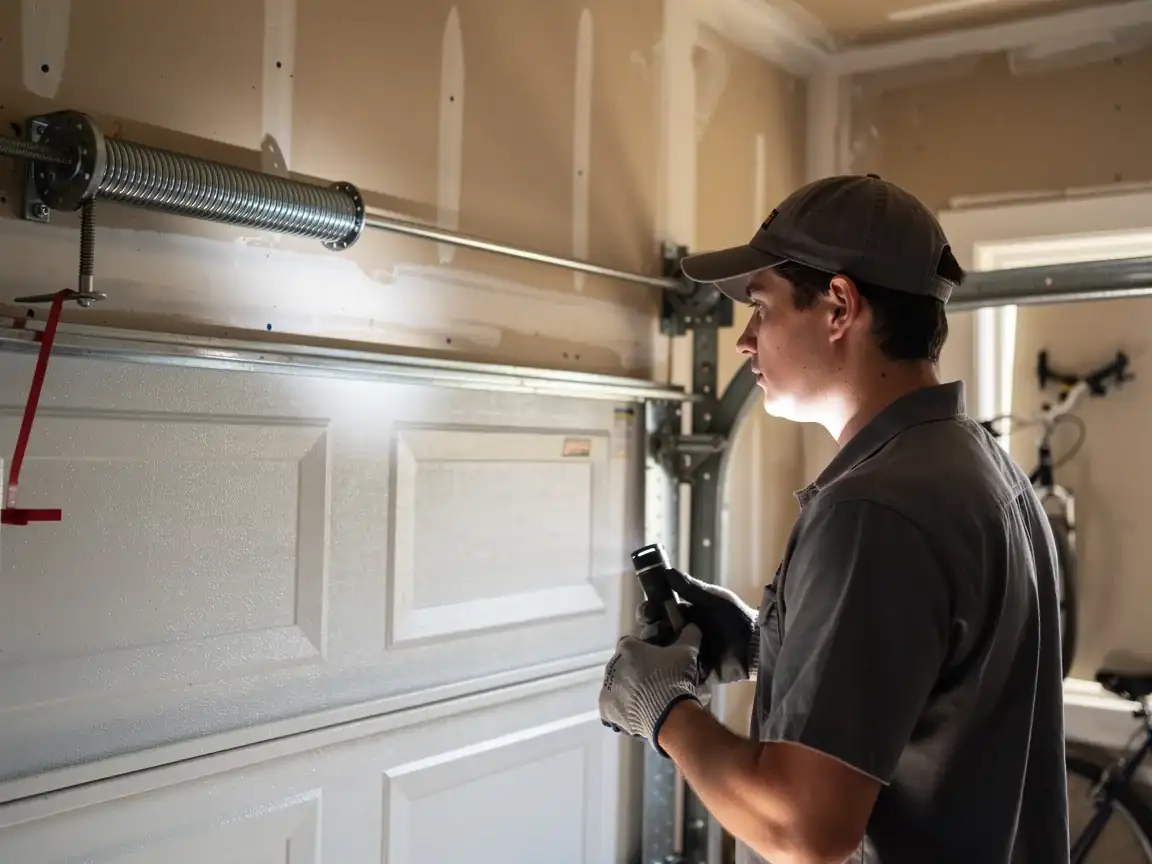
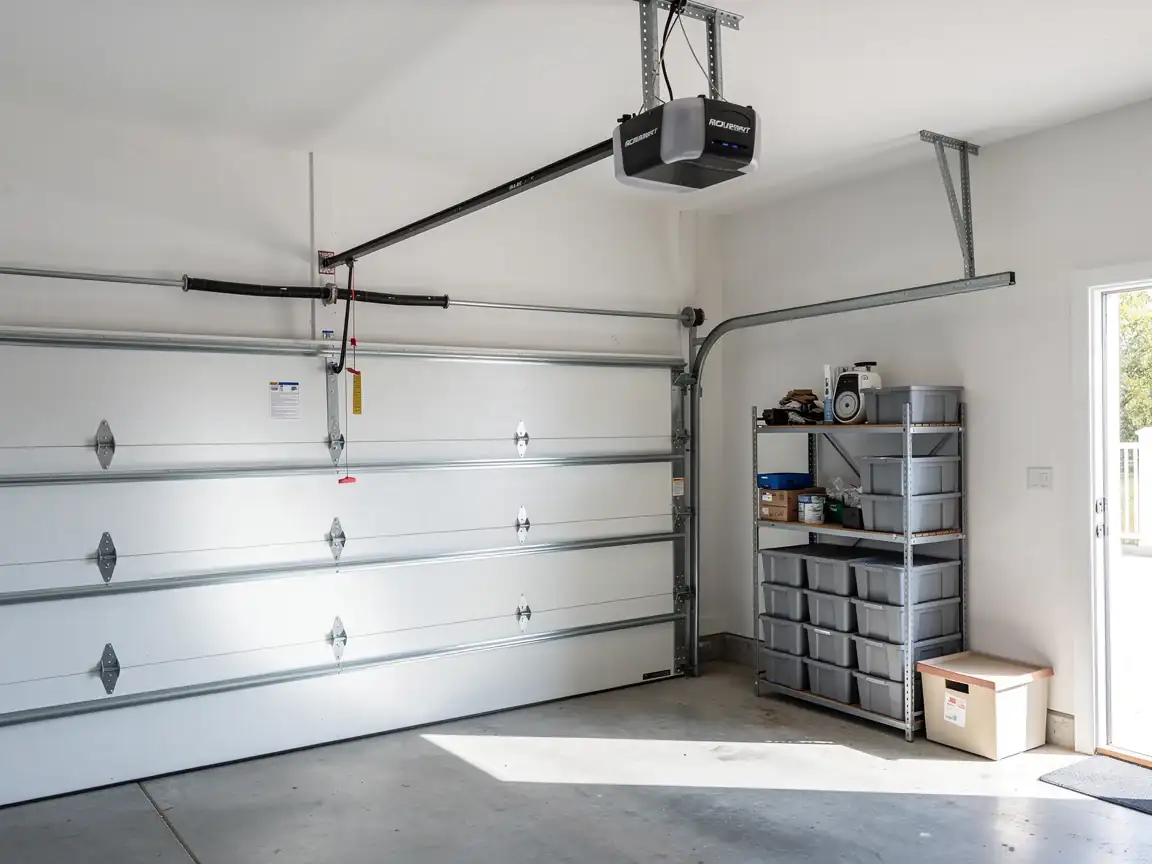
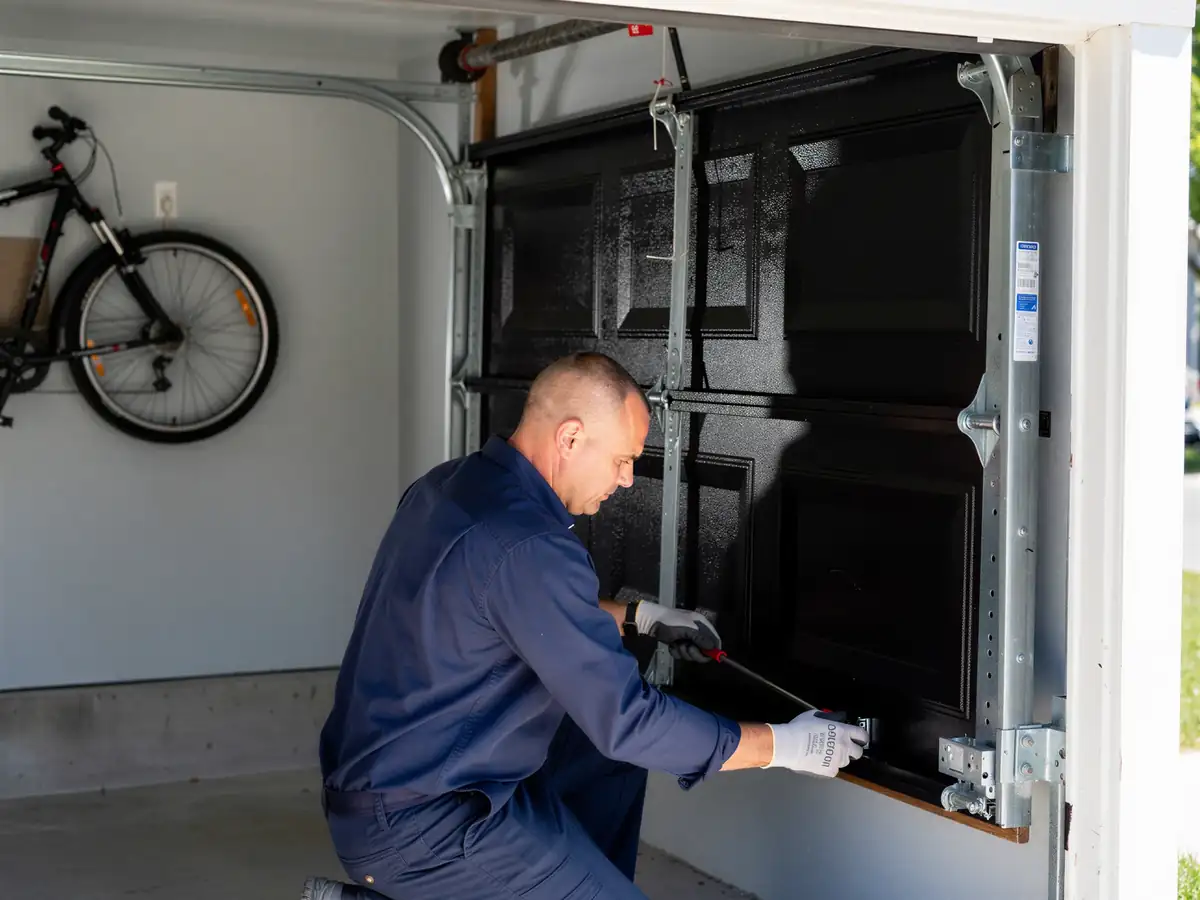
The old spring comes off the shaft, we match the new spring's wire size and wind count to the door's actual weight, and we check the cable drums and bearing plates while we're in there, since on a door this old they've usually taken similar wear. If the house still has a single spring from the original install, we'll talk about whether to step up to a two-spring setup - it spreads the load and gives you a backup if one side ever fails.
When the issue is a sagging track or loose bracket
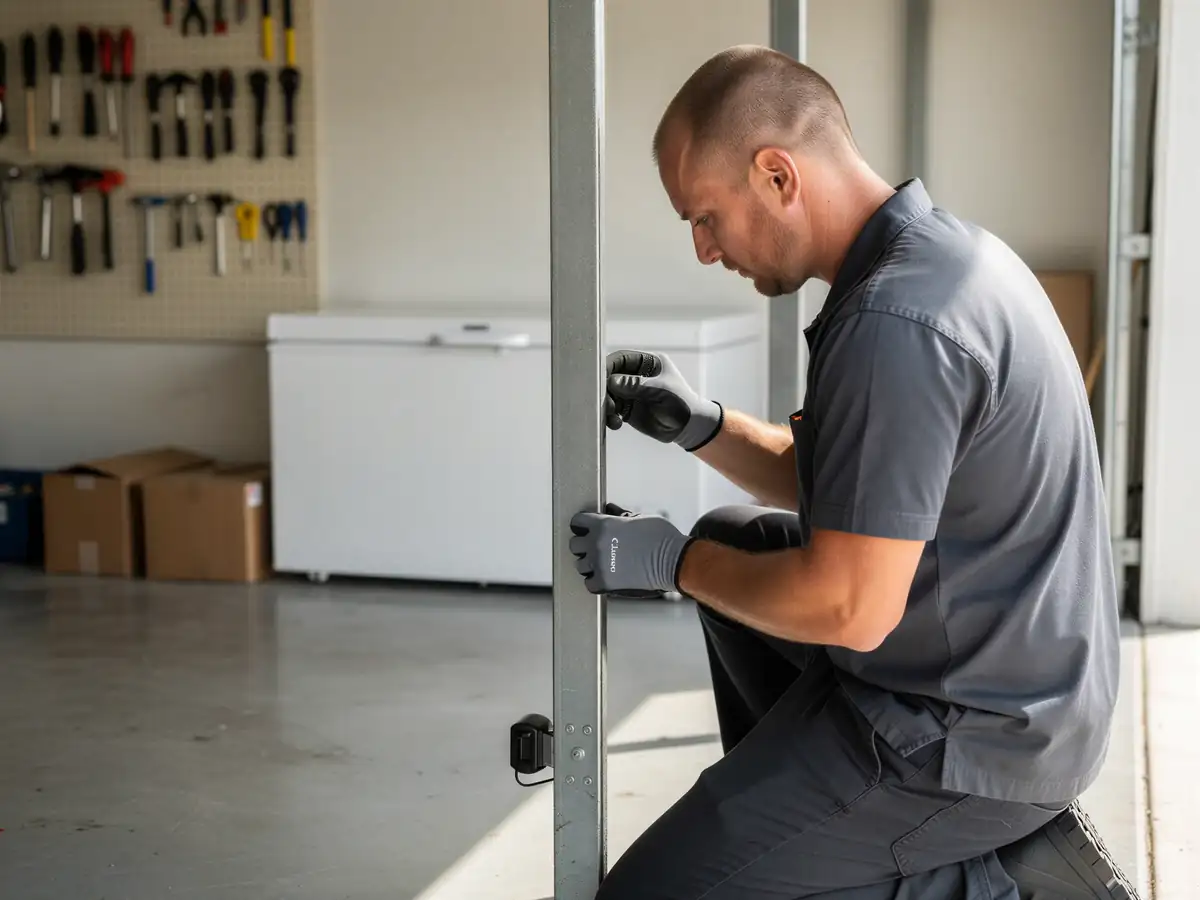
The fix is re-securing the hardware into solid framing, not just re-driving the same screws into wood that's already stripped out. On some of the older doors in Quincy's 1960s-era neighborhoods, that means adding backing where the original jamb has degraded.
Here's the honest limit
If the door itself is original - thin panel, no insulation, hardware bent from years of use - sometimes the repair bill starts creeping close to what a new door costs. We'll tell you straight when that's the case instead of patching something that'll be back on our schedule next winter.
The Cost of This Job
We're not going to put a number here that doesn't hold up once we're standing in your garage - too much depends on spring size, door weight, and what else has worn out alongside it. What we can tell you is how we think about it: with a median household income of $61,139 across our service area, most of the jobs we do are repairs, not full replacements, because replacement only makes sense once the door itself is failing, not just the hardware around it.
We work on houses across Quincy and also take calls out to Mendon, about 12 miles off, Liberty at 15, Camp Point at 18, and Kinderhook around 20 - all areas with the same kind of post-war and 1960s housing stock, so the same spring and bracket issues show up there too. If you want a real number, that comes from someone looking at the actual door and spring, not a quote over the phone.