Why This Fails Locally
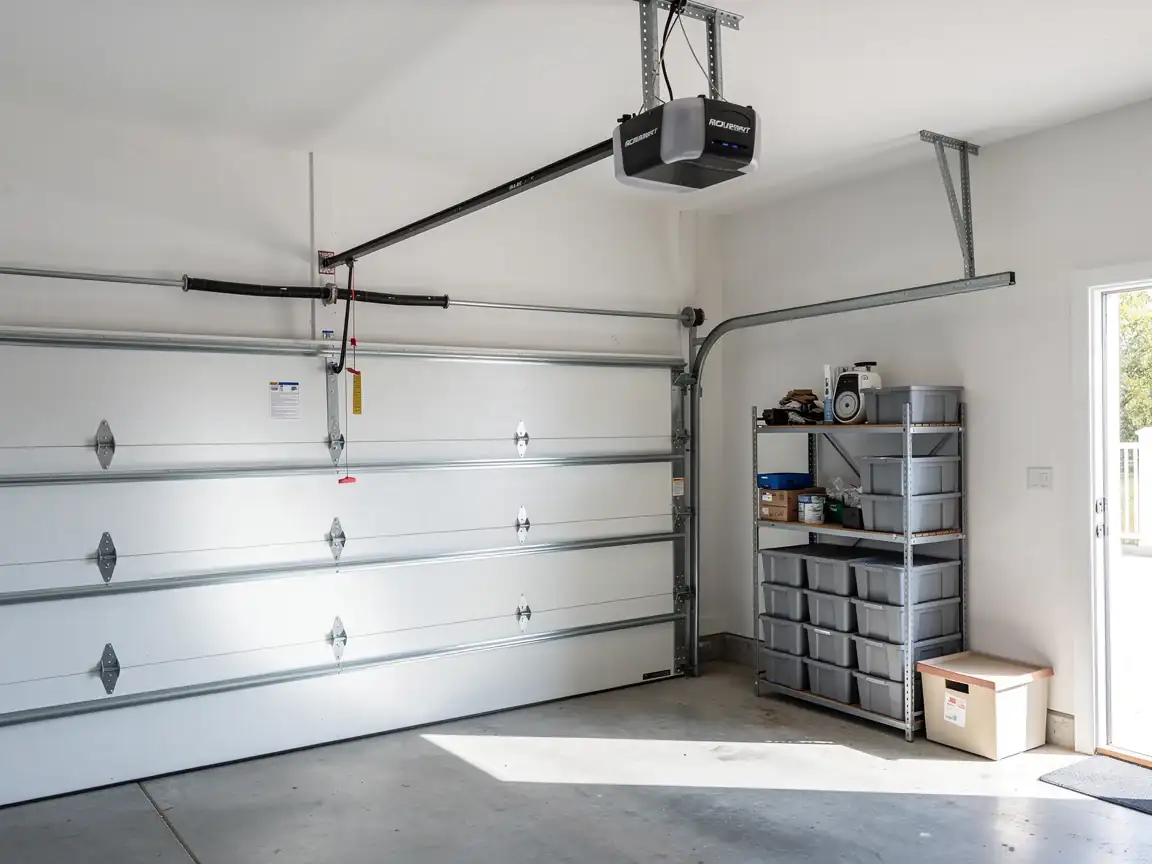
Most of the houses in the Quincy area were built between 1938 and 1969, with the median landing around 1964. That means a lot of openers in this service area aren't original to the house - they're second or third units, often chain-drive models bolted onto headers that have shifted, settled, or been re-shimmed more than once over sixty years. The mounting isn't always square anymore, and an opener fighting a header that's a quarter-inch off level burns through gears faster than one on a true frame.
Across the four main pockets of 1960s-70s housing stock here, you see the same pattern: a remodel in the 80s or 90s brought in a new opener, and that unit is now old enough that its nylon gear and capacitor are both near the end of their service life. Add a cold-moderate climate band, and you get a second problem layered on top. Winter cold makes steel springs and cables stiffer, which means the opener's motor has to pull harder on a door that isn't moving as easily as it did in July. An opener rated for a light residential door wasn't built to lean into stiff cable tension every January, and the strain shows up as stripped gears, tripped overload switches, or a motor that hums and goes nowhere.
How It Shows Up
The most common call is an opener that runs but the door doesn't move - the motor hums, the light blinks, and nothing happens at the drive gear. That's almost always a stripped nylon gear, which is a wear part, not a defect, and it wears out faster on openers mounted to the slightly-off headers common in this area's older framing.
The second pattern is a door that reverses on its own right before it closes. Cold weather tightens cables and stiffens springs, which changes how much resistance the opener's travel sensor expects to feel. If the limit settings haven't been adjusted since the unit went in, the opener reads normal winter resistance as an obstruction and kicks the door back up.
Third is the remote or wall button that works intermittently - sometimes it's the circuit board failing from age, sometimes it's a logic board that's been through enough freeze-thaw cycles that a solder joint has cracked. We also see openers that just stop responding to any input at all, which usually means the board has failed outright rather than a settings issue.
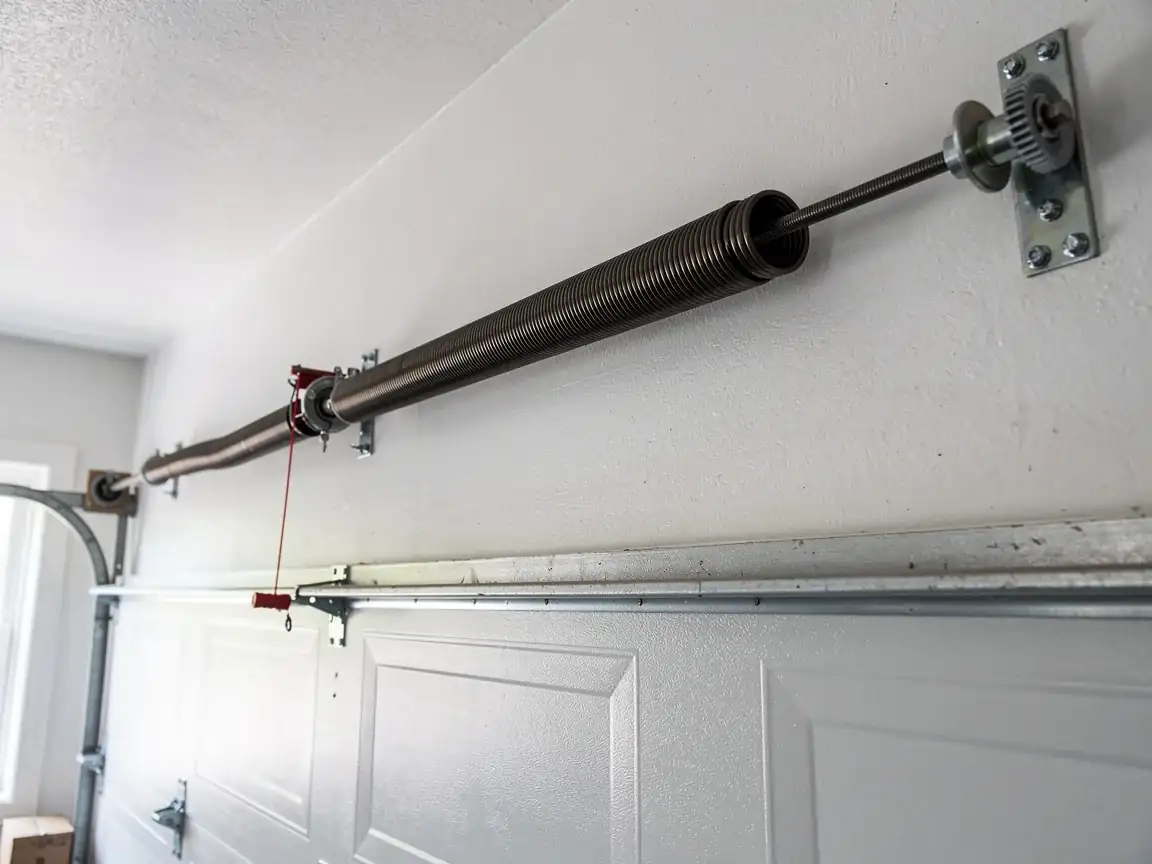
A door that's hard to lift by hand even with the opener disconnected isn't an opener problem - that's spring tension, and no amount of opener repair fixes it.
What the Fix Involves
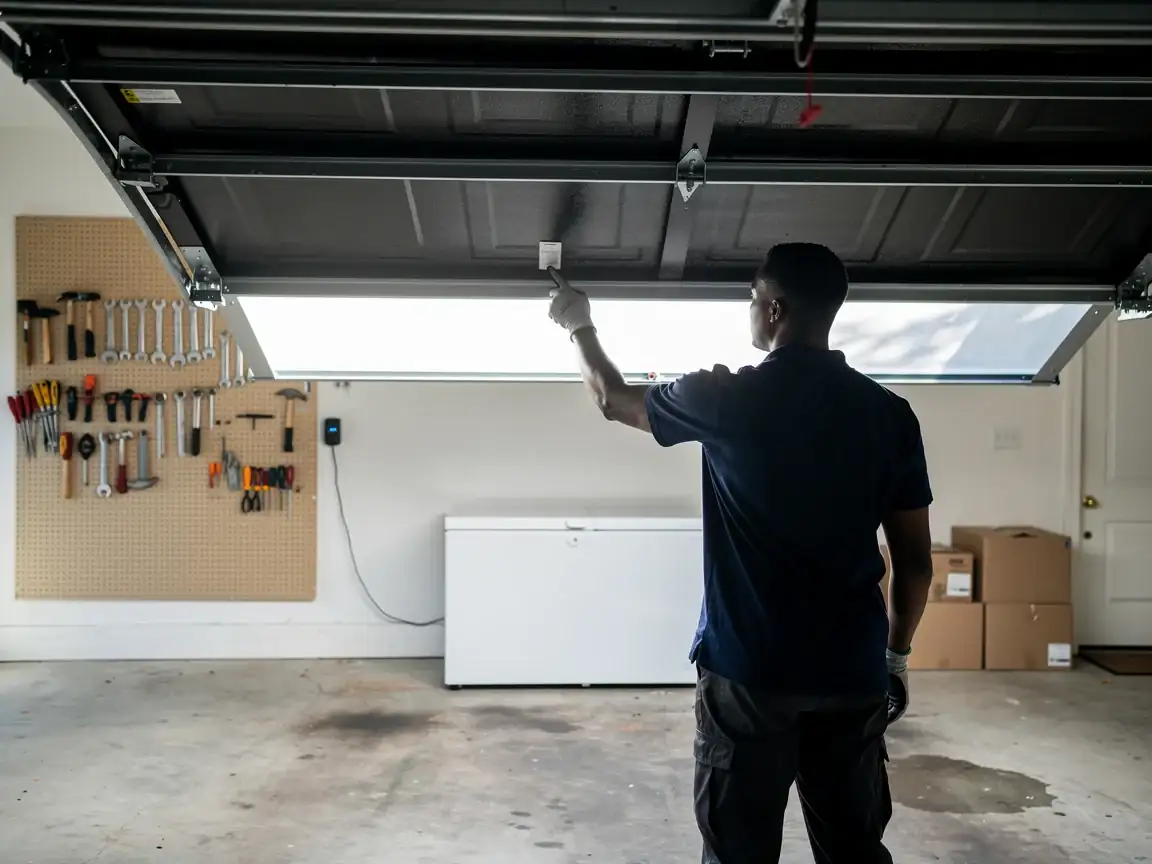
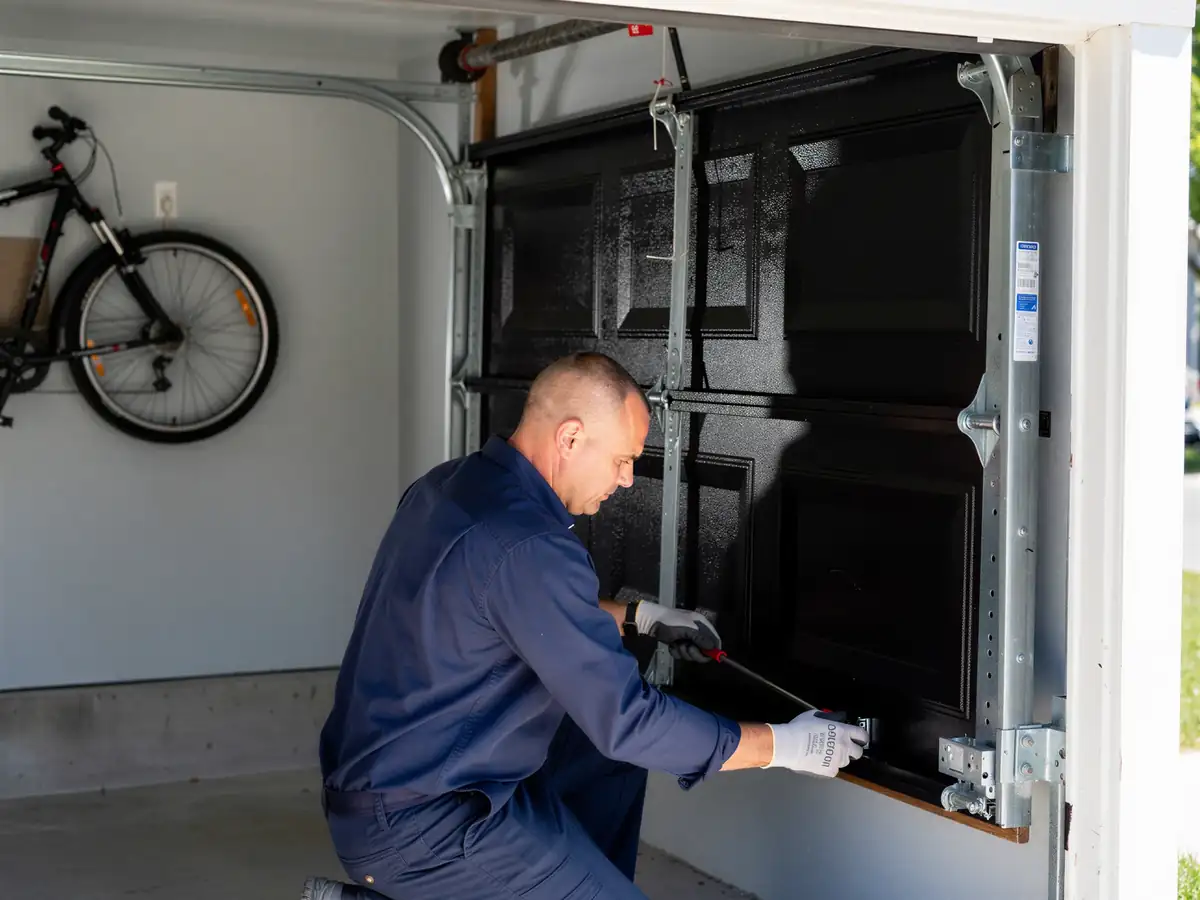
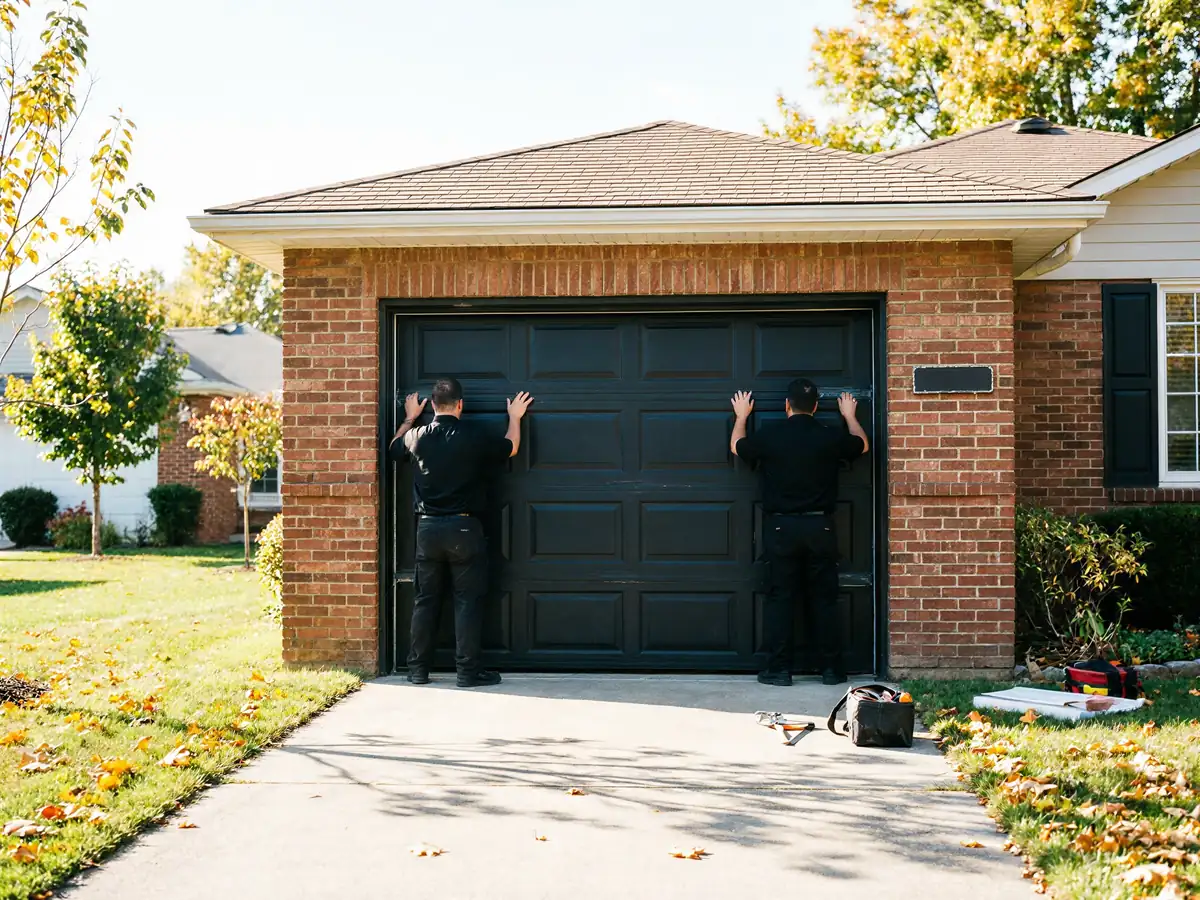
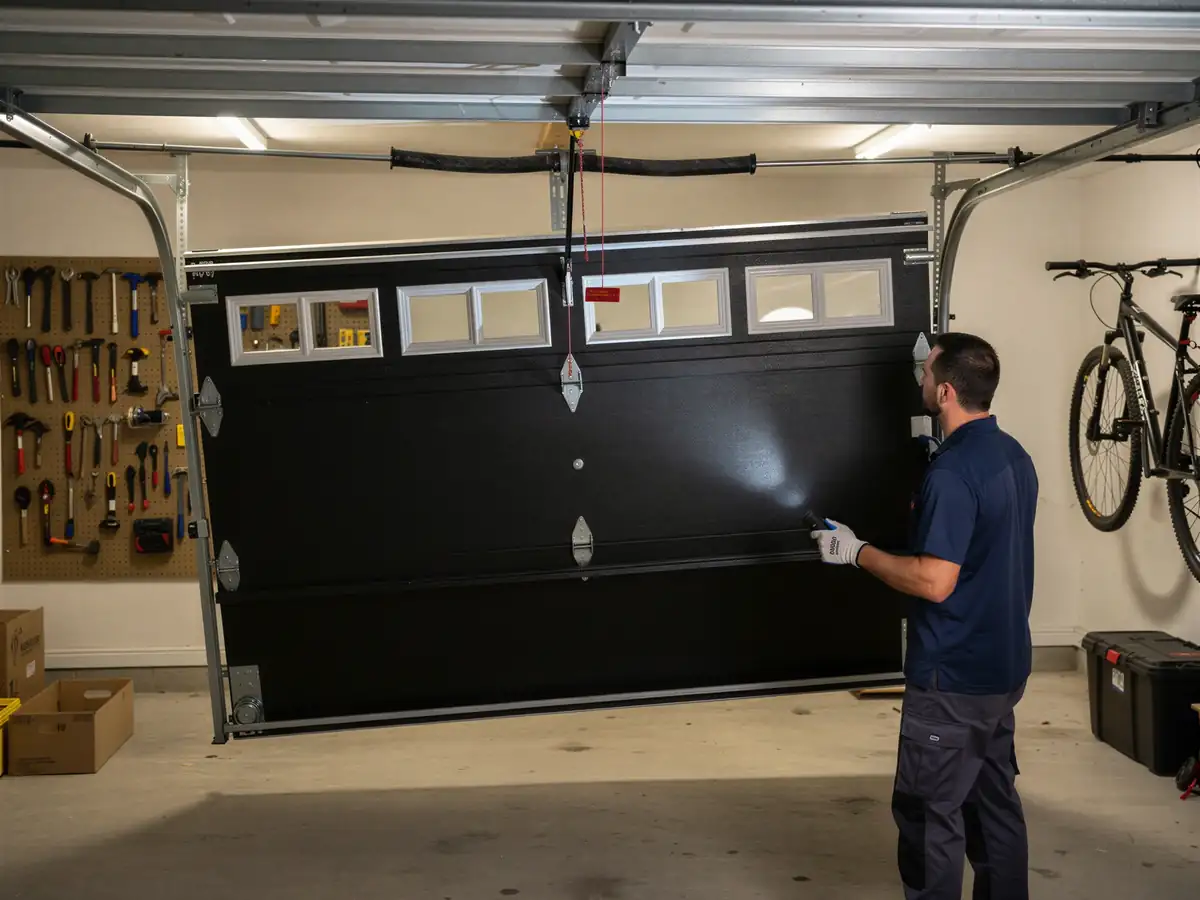
We start by disconnecting the opener and checking the door by hand
If the door is heavy or uneven on its own, that's a spring or track issue and we say so before touching the opener - replacing a motor won't fix a door that's fighting bad springs.
Once we've confirmed the opener is the actual problem, the job usually comes down to one of three repairs
A gear and sprocket kit if the drive gear has stripped, a logic board swap if the unit powers on but won't take commands, or a full recalibration of travel limits and force settings if the door is reversing or stopping short. On older units, we check whether replacement parts are even still made for that model - some of the 80s and 90s chain-drive units common in this area's remodeled houses have been discontinued long enough that parts aren't available, and at that point repair isn't the honest answer. We'll tell you straight if a new opener costs less than chasing parts for a dead one.
We also re-square the mounting bracket on the header if that's contributing to premature gear wear
Since fixing the gear without fixing the mount just buys you another year before the same failure happens again.
The Cost of This Job
What an opener repair runs depends on what's actually broken - a gear kit is a different job than a logic board, and a board is a different job than a full unit swap when parts aren't available anymore. We quote the job after we've opened the unit up and confirmed which part failed, not before.
With median household income in this service area at $61,139, most owners we talk to want the specific failed part fixed rather than a blanket opener replacement, and in most cases that's the right call - a gear or board repair is usually the smaller job. The exception is an opener old enough that the manufacturer has stopped making parts for it. At that point, hunting down a discontinued gear kit can cost more in time and money than a new opener, and we'll tell you when we hit that wall instead of running up a bill chasing parts that don't exist.
We don't give phone quotes for opener repair because two openers with the same symptom can have completely different causes. A quick look at the unit tells us which part failed and what that part actually costs to replace.