Why This Fails Locally
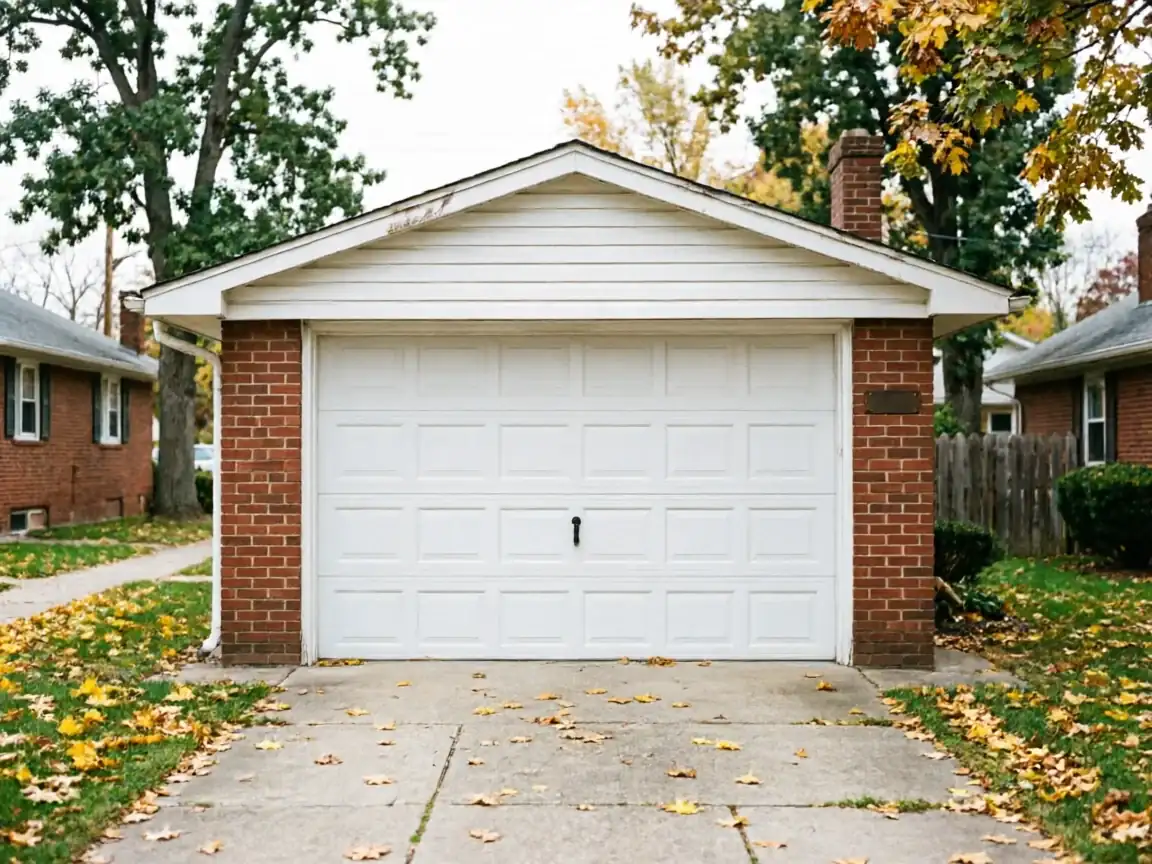
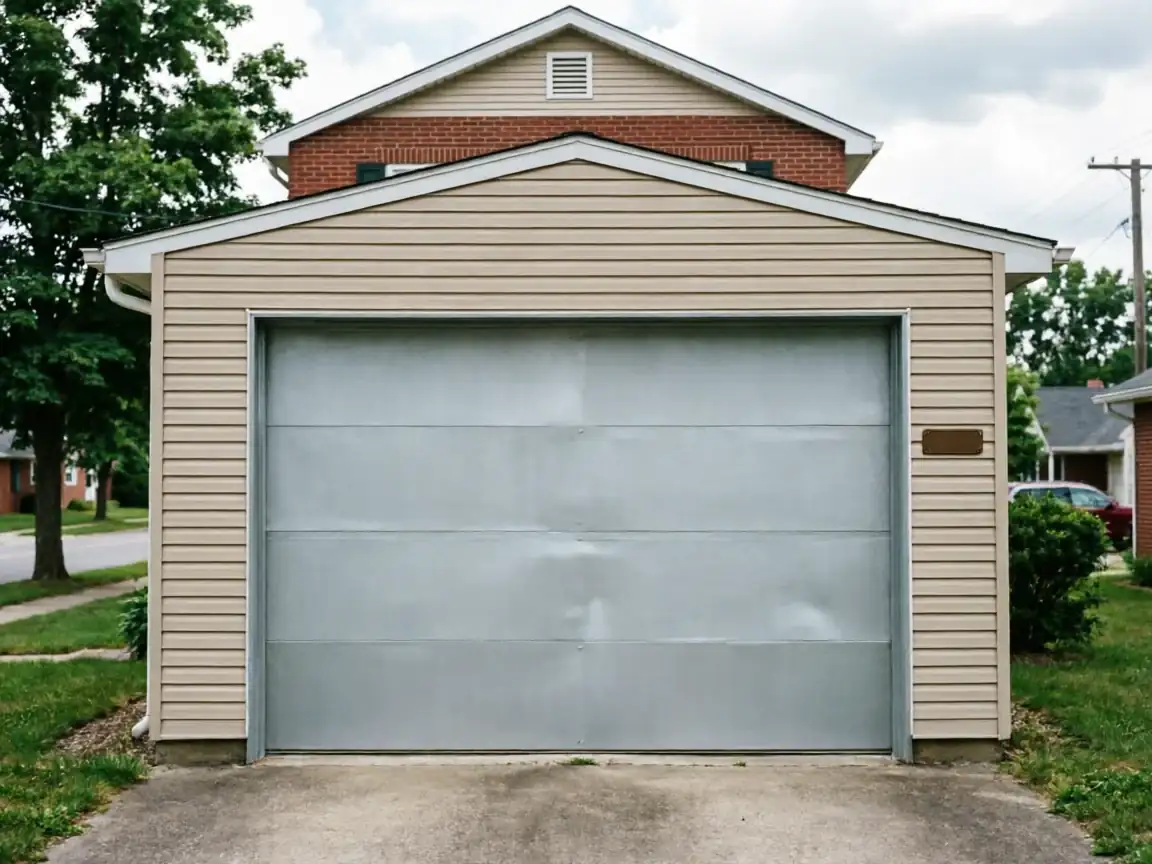
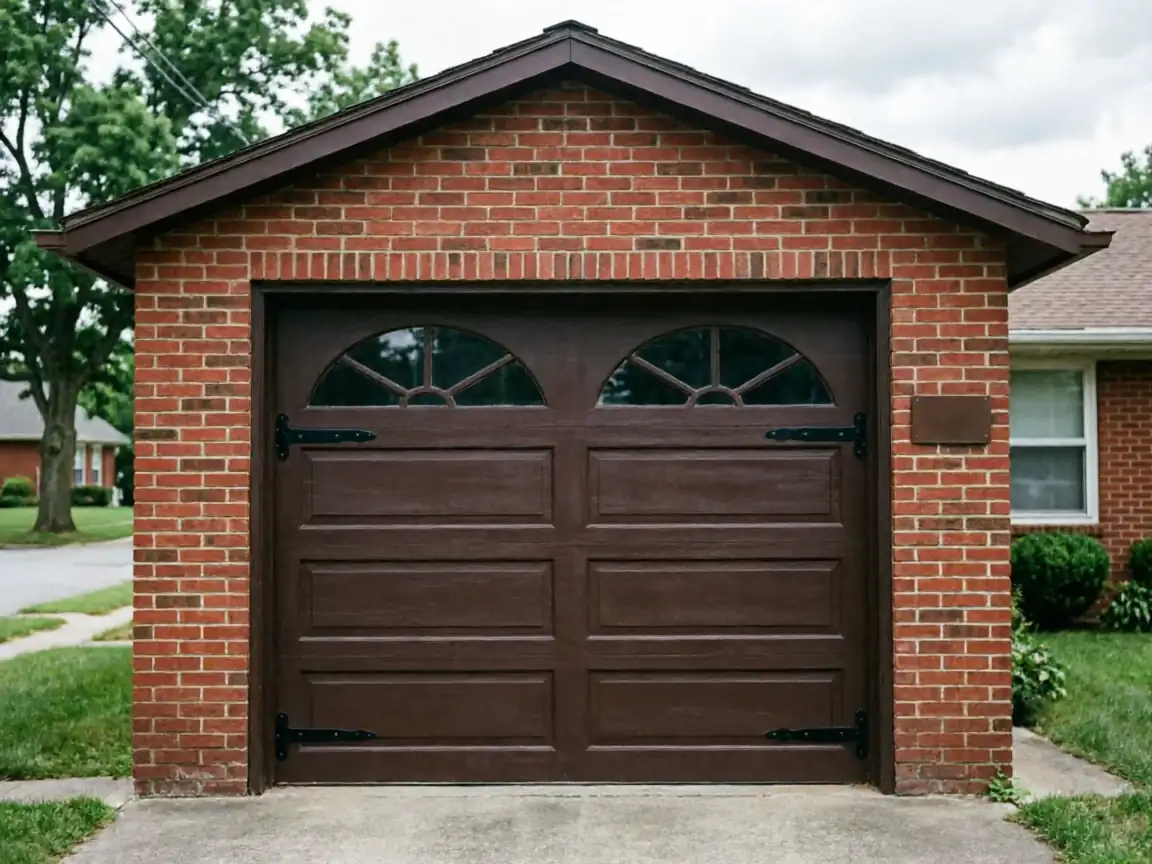
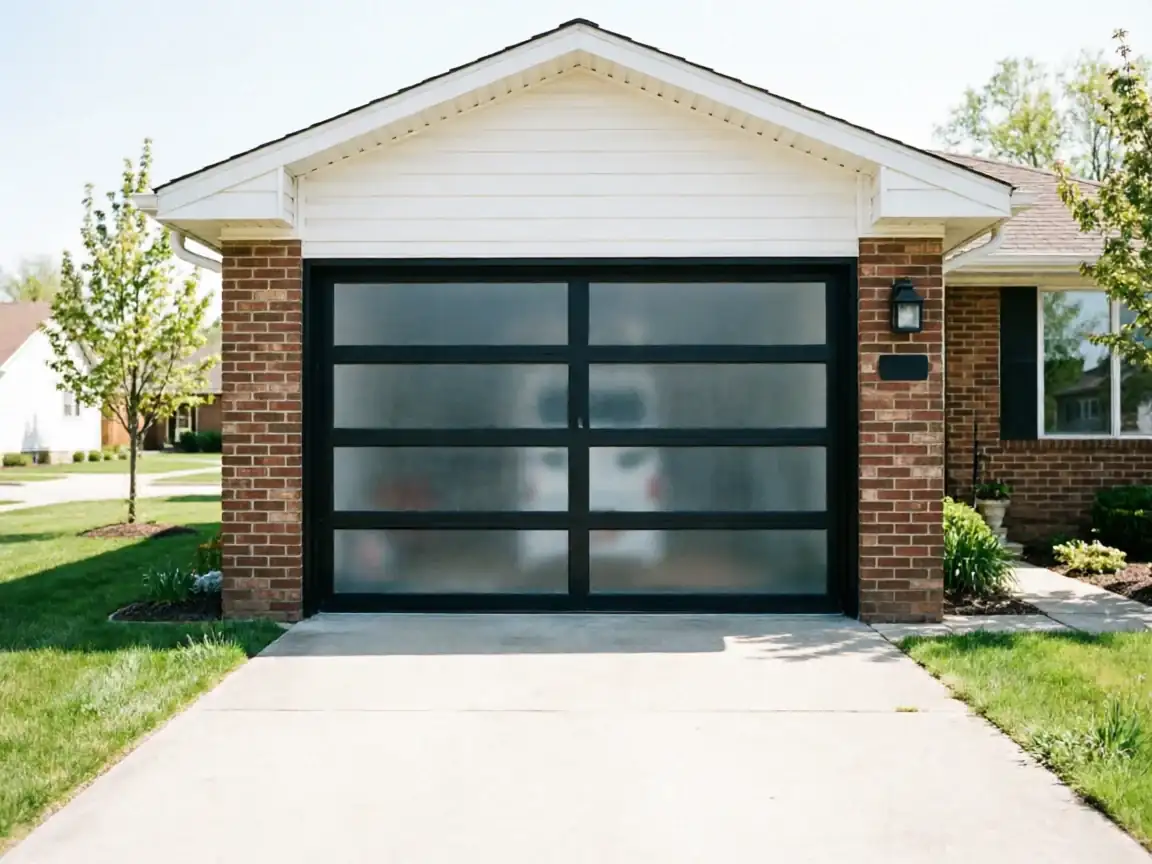
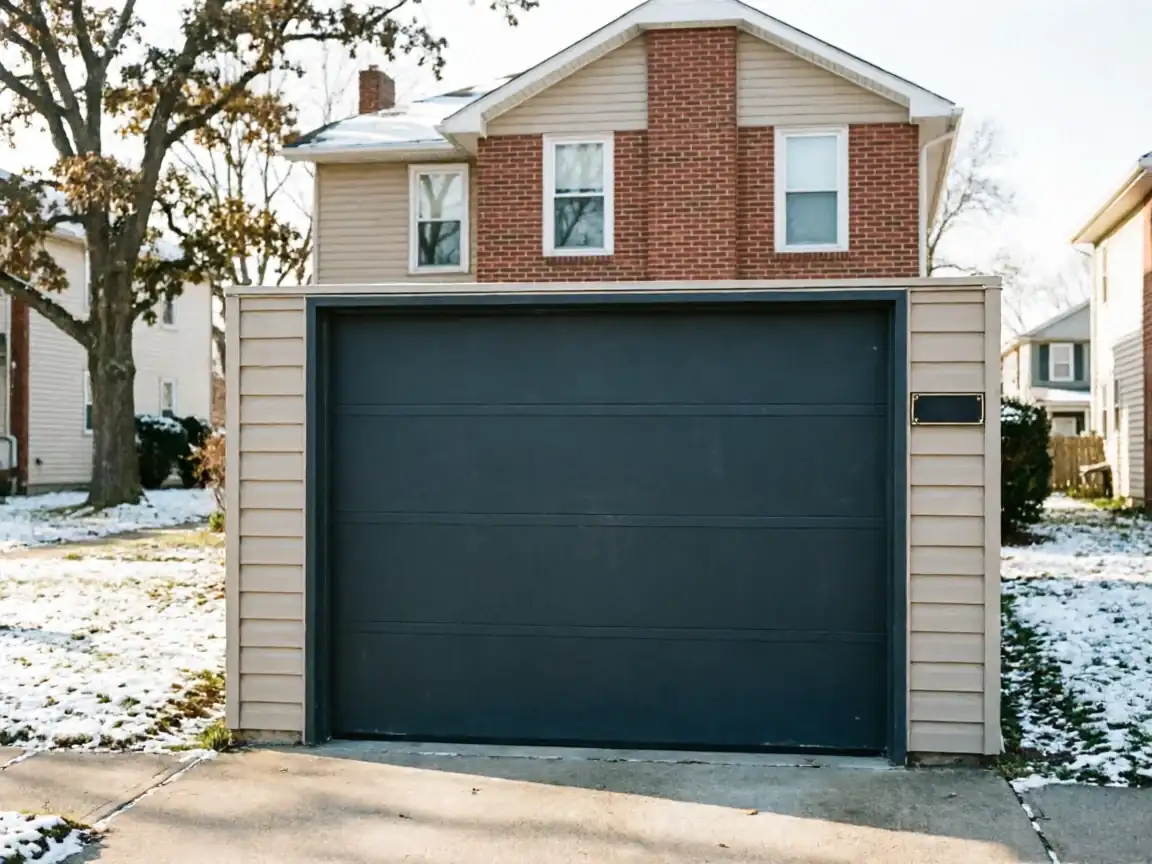
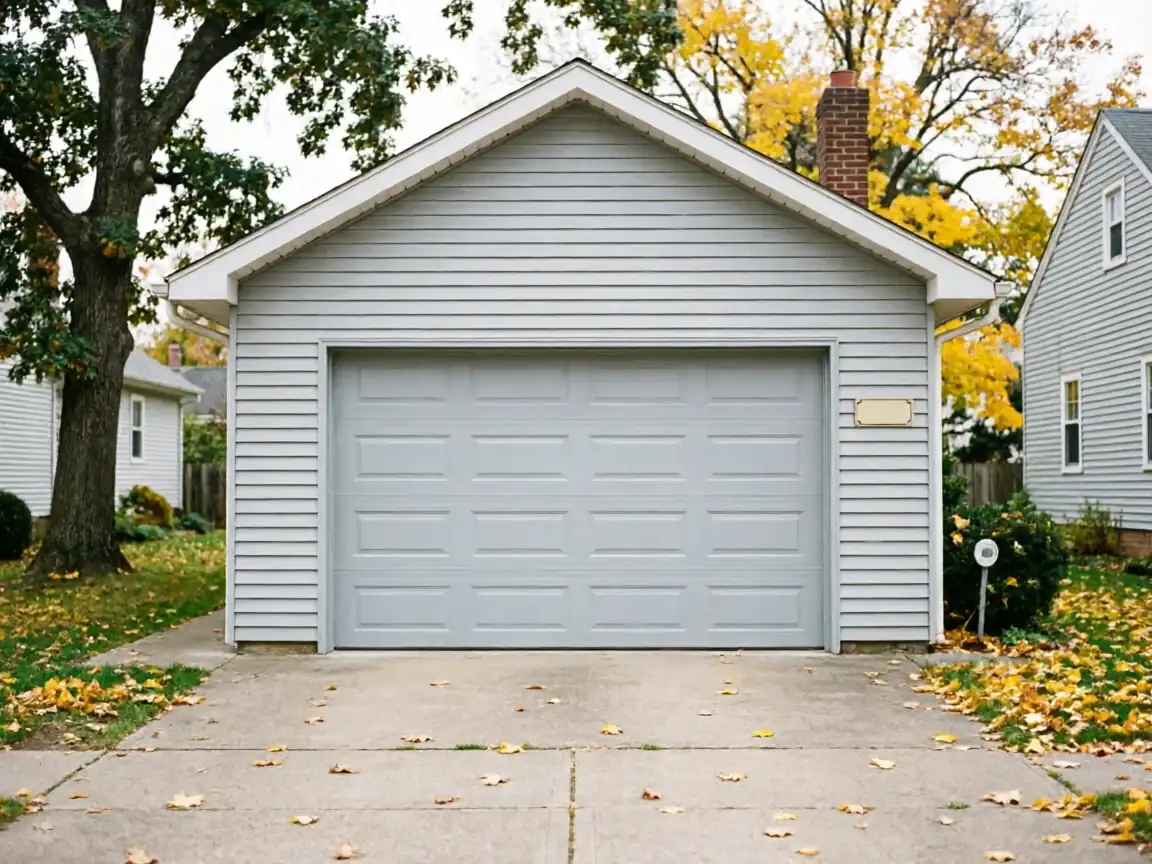
Most houses in Mendon went up around 1969, right at the tail end of a build wave that ran from 1938 to 1969 across this part of the service area. A door installed when a house was built in the late '60s was almost always a single-layer steel panel on a basic extension or torsion setup - no insulation, no weatherseal to speak of, and track hardware sized for a lighter door than what's sold today. That's not a flaw in the original work. It's just what
How It Shows Up
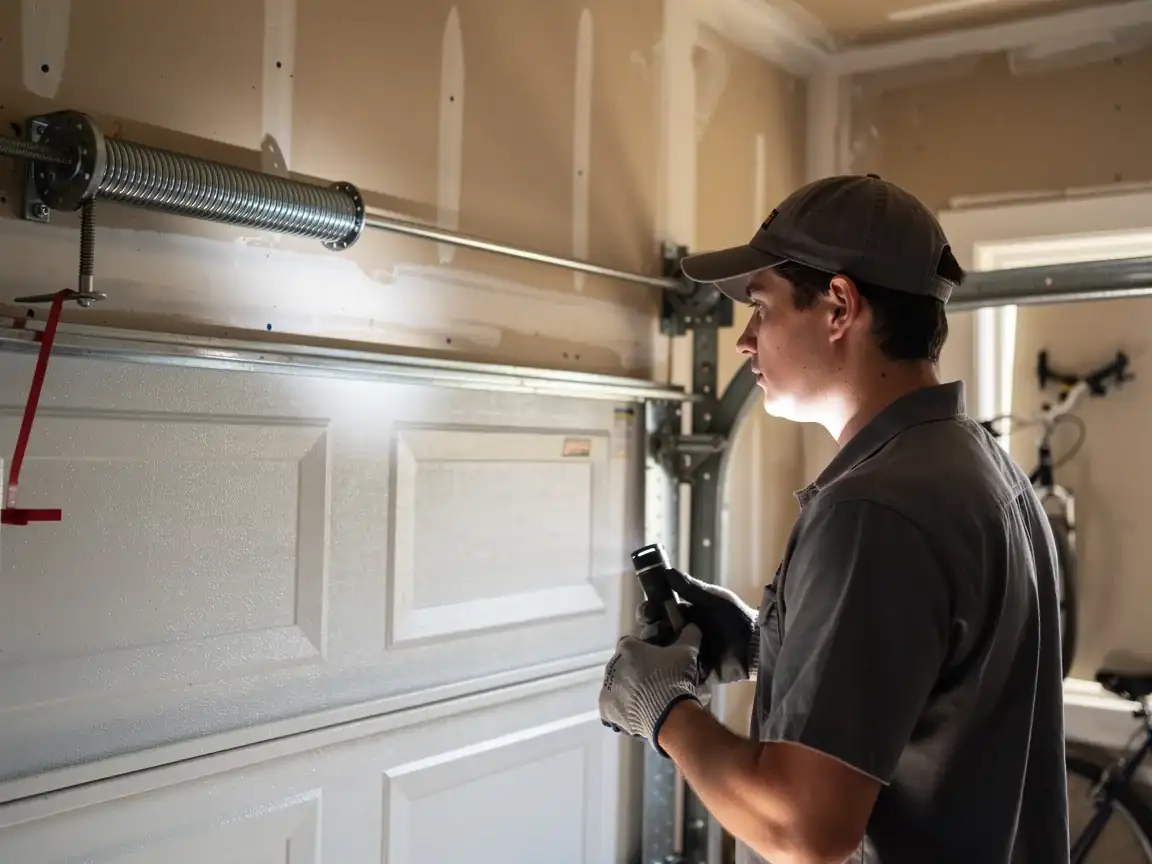
On a door this old, the failure isn't usually sudden. It shows up as a panel that's started to bow at the bottom corner, a track that's pulled slightly out of plumb from decades of temperature swings, or an opener straining because the spring tension was set for a door half the weight of a modern insulated replacement bolted onto the old rail. In a cold-moderate climate band like this one, steel panels without a thermal break also sweat and rust from the inside out, which you won't see until the bottom section is already flaking. None of this means the door is dangerous tomorrow. It means the hardware and the door are mismatched, and every year that passes makes the mismatch worse.
The DIY Question
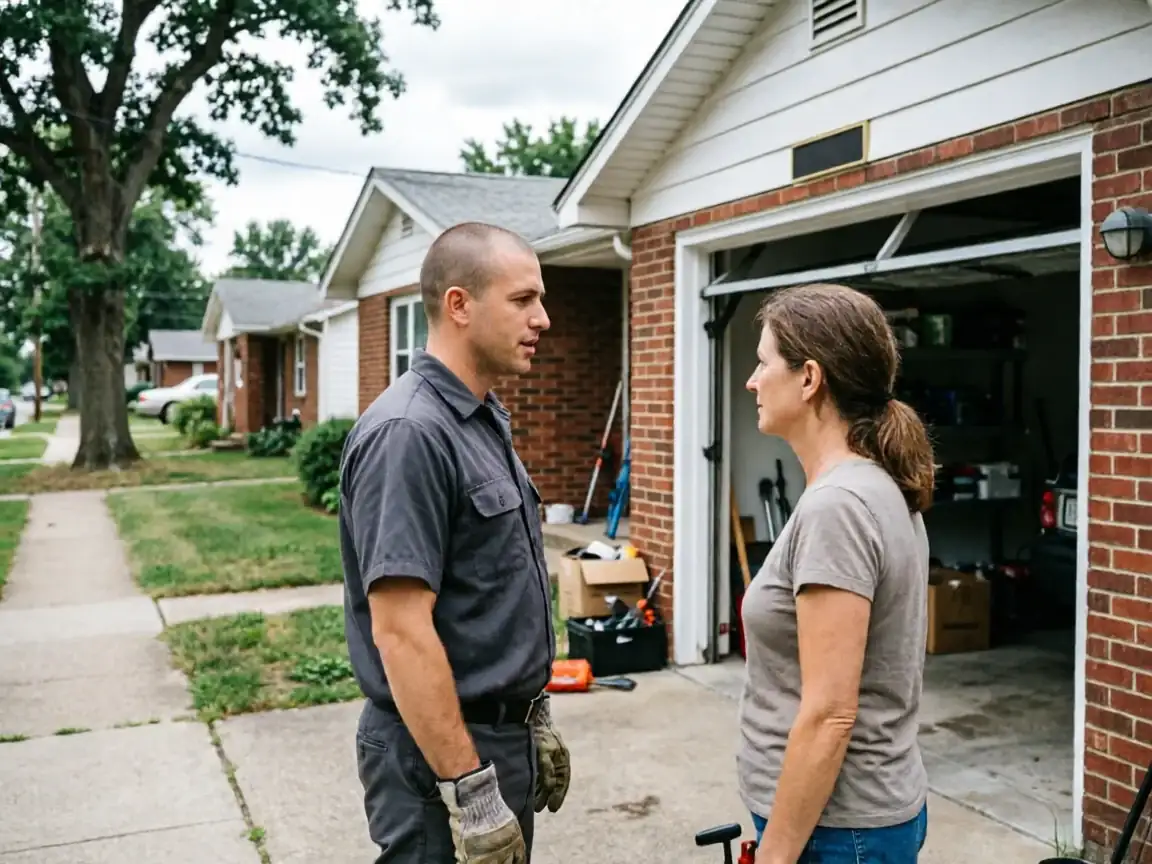
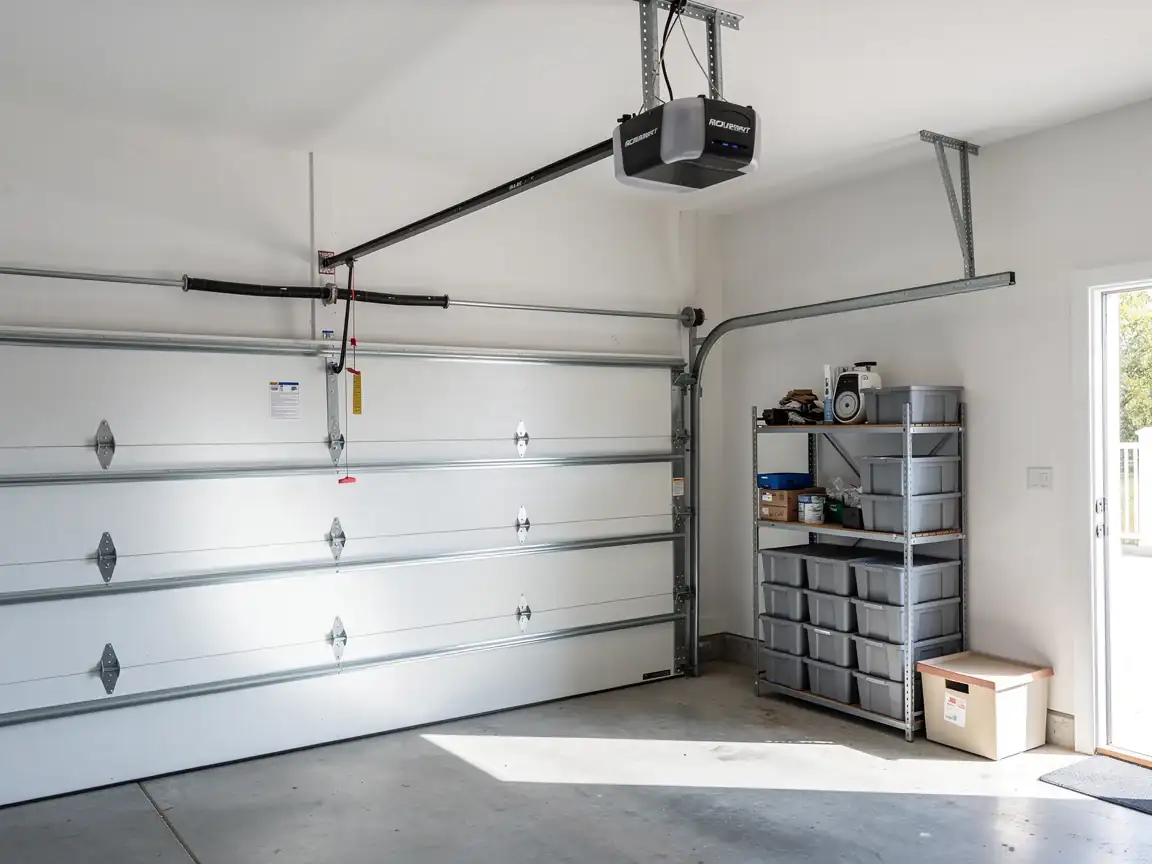
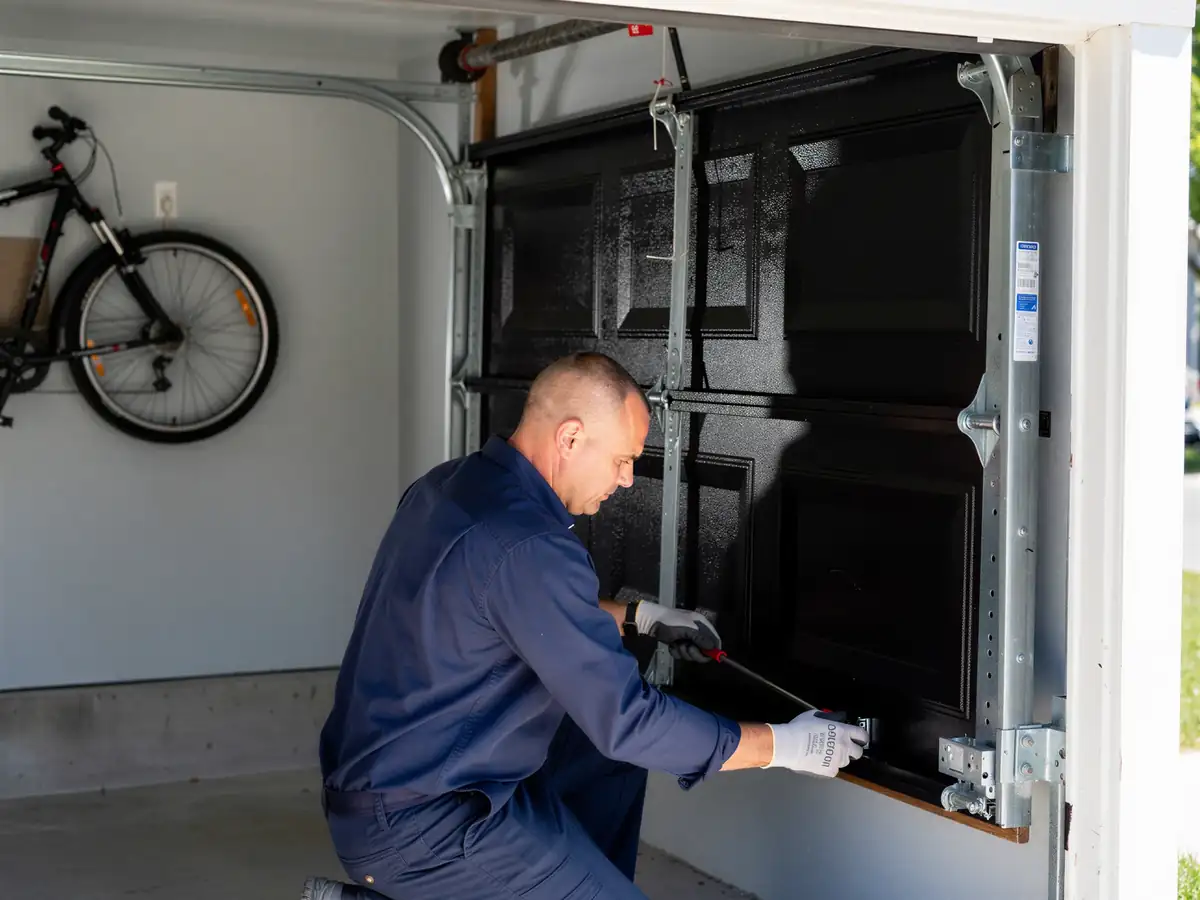
Swapping a door panel yourself on a house this old is not a weekend project, and we'll say plainly where it stops being worth attempting. Torsion springs on a door from this era are often under tension nobody's touched since installation, and the track alignment on houses built in the 1960s doesn't always match current door widths without some header work. If all you need is a new opener on a door that's otherwise sound, that's a different job and a smaller one. But a full new install on original 1960s hardware is not a bolt-it-back-together afternoon - we'd rather tell you that now than have you call us mid-job.
Where This Job Goes Sideways
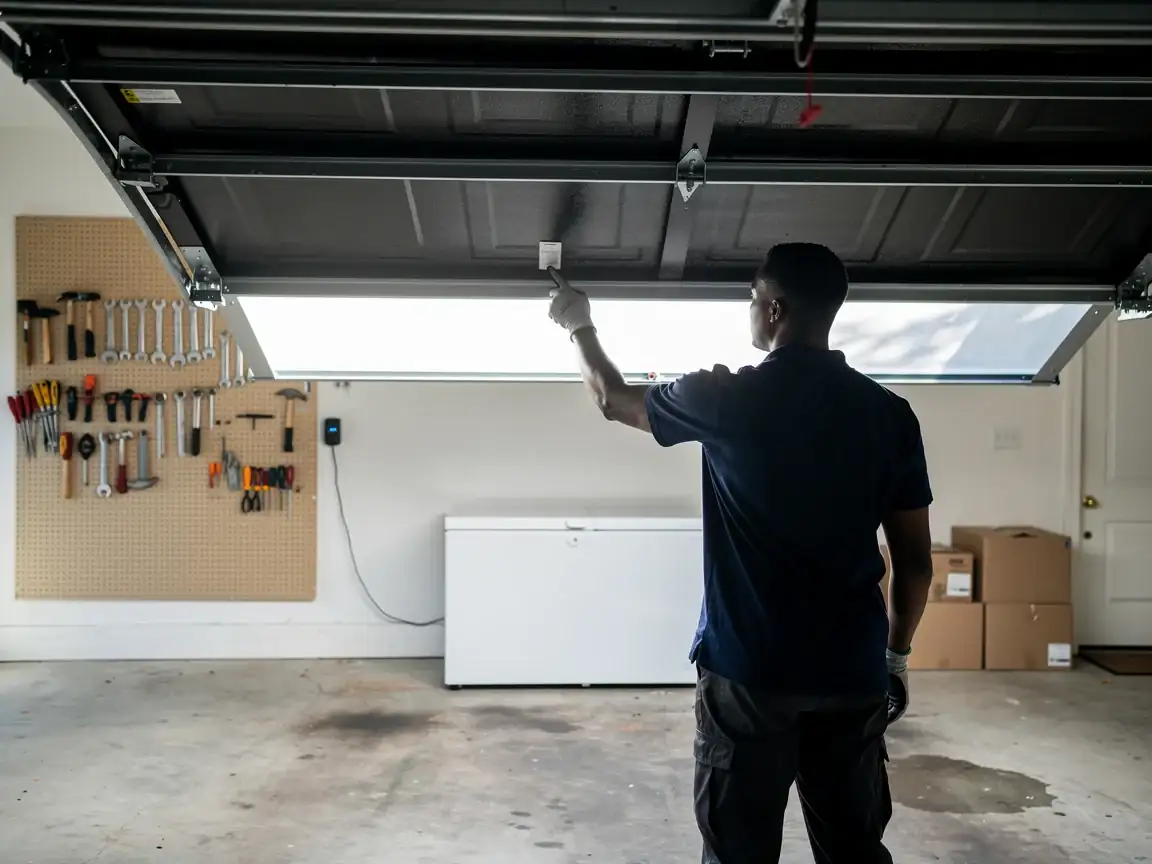
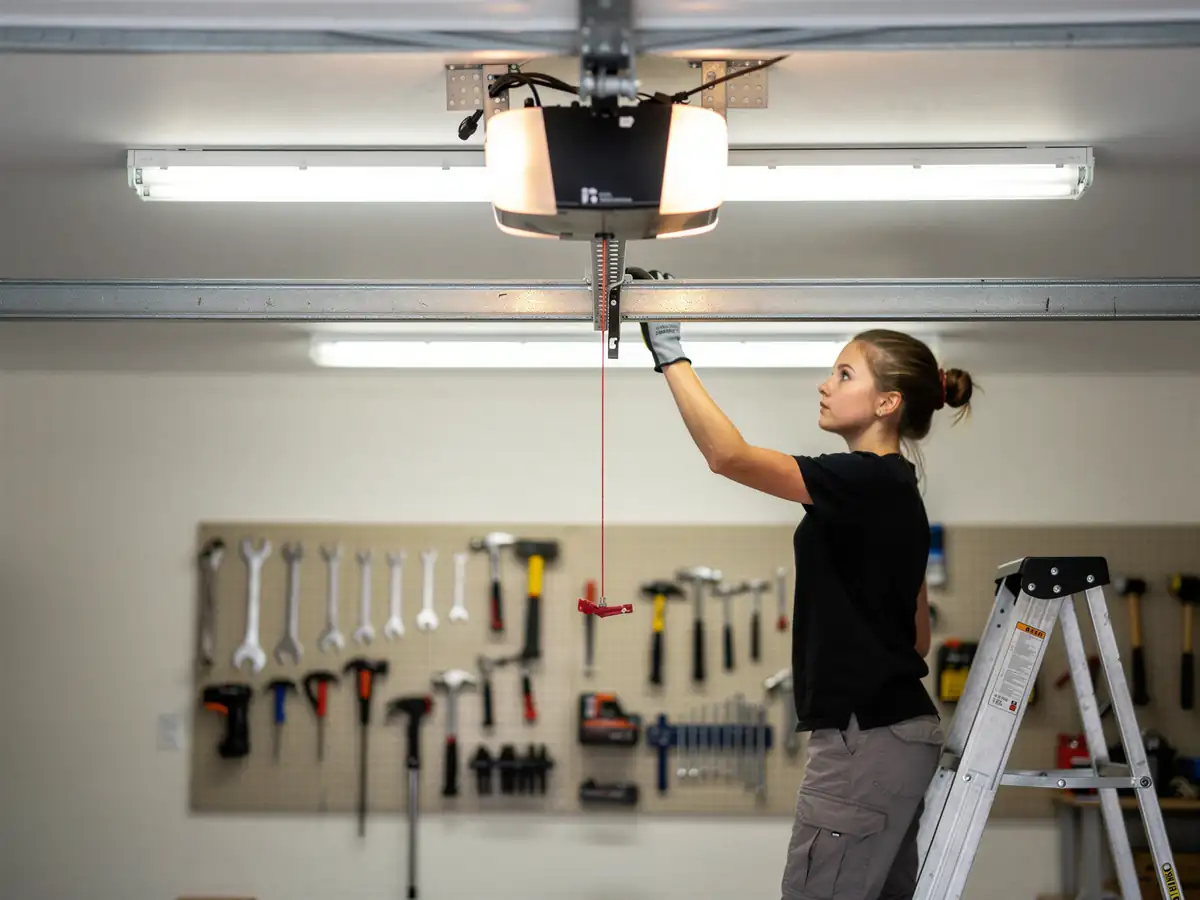
The most common surprise on a Mendon install is headroom. Houses from this build era were framed before insulated doors with thicker panels were standard, and the header clearance that worked for a thin steel door sometimes doesn't leave enough room for a new insulated section plus modern spring hardware. The second surprise is the opener mount - many of these garages were framed for a lighter rail-mounted unit, and a heavier new door can mean reinforcing the bracket before the opener goes back up. Neither issue is unusual, and neither one is cause to walk away from the job, but it's why a phone-quote number on an old house is always a guess until someone's measured the header in person.